2026 Best Meat Processing Equipment for Global Buyers?

Choosing the right equipment can determine whether a processing plant runs smoothly or struggles daily. For global buyers, the decision involves more than price, capacity, and attractive photographs. A reliable line must handle local meat types, workforce skills, cleaning routines, energy limits, and production targets. This guide examines the 2026 best meat processing equipment for global buyers, including grinders, cutters, mixers, tumblers, fillers, slicers, smokehouses, refrigeration systems, and automated packaging units.

Temple Grandin, an animal-science professor and livestock-handling expert, has said, “The best way to improve handling is to observe the animals.” Her principle also applies to equipment selection. Buyers should watch how products move through each machine, where residue collects, and how operators reach control panels. A stainless-steel grinder may look impressive, yet poor access can make sanitation slow. Small details matter.

This review uses practical purchasing criteria, including food-contact materials, temperature control, output consistency, maintenance access, spare-part availability, and supplier support. It also considers established safety and hygiene expectations, while recognizing that requirements differ between countries and facilities. The phrase meat meat processing equipment may sound repetitive, but it reflects how some buyers search online for industrial solutions. Search terms do not always sound perfect.

No ranking can suit every plant. A small butcher shop may value compact design, while a large exporter may need sensors, conveyors, and traceability software. Some recommendations may need reconsideration after site testing. Buyers should request demonstrations, inspect cleaning procedures, compare total ownership costs, and verify documentation before signing contracts. Equipment should earn trust on the factory floor, not only in a sales brochure.
2026 Best Meat Processing Equipment for Global Buyers?

What Meat Processing Equipment Includes and How It Works

2026 Best Meat Processing Equipment for Global Buyers

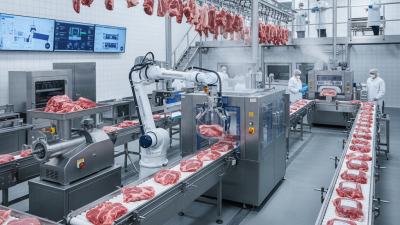
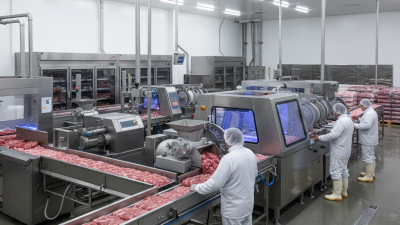
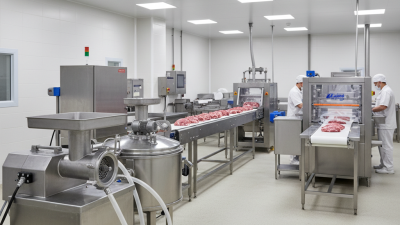
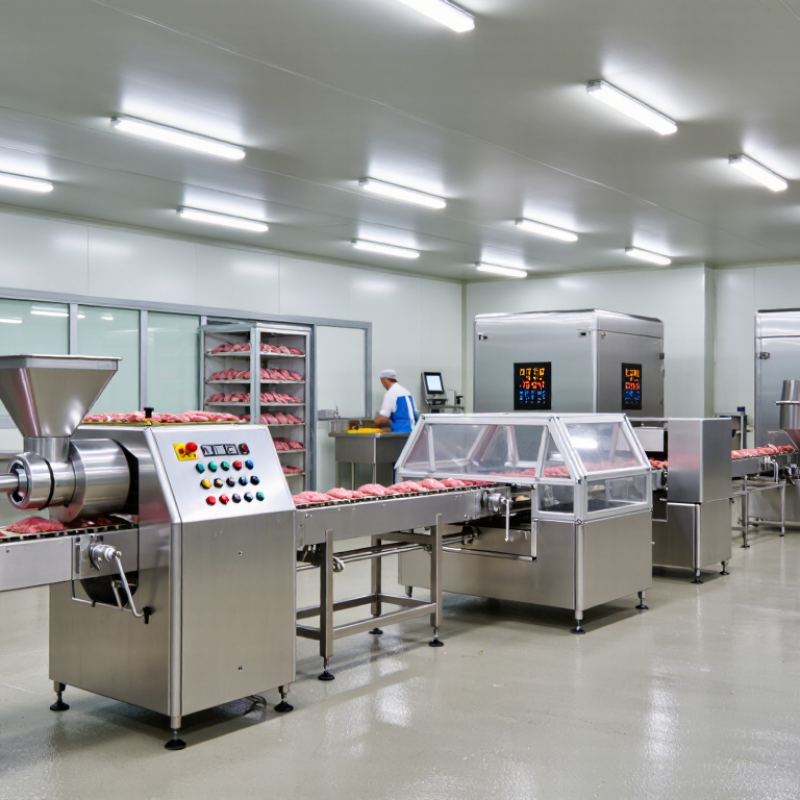
Meat processing equipment covers the complete path from chilled raw material to sealed product. It usually includes receiving tables, inspection stations, grinders, mixers, cutters, fillers, slicers, scales, and packaging machines. Refrigeration units protect product temperature between operations. Stainless steel frames support frequent washing and reduce contamination risks.

The process starts with controlled receiving and visual inspection. A grinder reduces meat into consistent particles for burgers, sausages, or prepared foods. Mixers distribute fat, seasonings, and other approved ingredients evenly. Bowl cutters create finer textures through high-speed blade action. Fillers move the mixture into casings or trays with measured pressure. Slicers then produce uniform portions, while vacuum or modified-atmosphere packaging limits air exposure.

Equipment selection requires more than checking output per hour. Buyers should examine cleanability, emergency stops, temperature monitoring, electrical compatibility, spare-part access, and operator training. Local food regulations also matter. A machine suitable for one facility may not fit another facility’s workflow. Real plants are rarely perfectly balanced. A fast grinder can create bottlenecks at packing. An efficient filler may still waste material during changeovers. This is often overlooked.

Practical testing should include wet cleaning, product changeover, noise levels, and actual batch sizes. Operators should check whether controls remain readable beside water and gloves. Digital records can improve traceability, but only when staff use them consistently. More automation is not always better. Simple equipment can be more reliable where maintenance skills or technical support are limited.

Key Equipment Categories for Different Meat Processing Stages

2026 Best Meat Processing Equipment for Global Buyers?

Key Equipment Categories for Different Meat Processing Stages

Global buyers should match equipment to each processing stage, not purchase isolated machines. FAO’s Food Outlook 2024 places global meat production above 360 million tonnes annually. That scale increases pressure on hygiene, uptime, traceability, and cold-chain control.

Primary processing requires restrained conveyors, hygienic carcass handling systems, and accurate weighing equipment. Cutting and deboning lines need rigid frames, easy tool changes, and layouts that reduce operator movement. For minced products, grinders and mixers should control temperature closely. A small heat increase can damage texture and shorten shelf life.

Forming machines support consistent portions for patties, nuggets, and shaped products. Thermal stages may include smokehouses, steam ovens, or continuous cooking systems. Their controls should record core temperature and production time. Packaging equipment then adds vacuum, modified-atmosphere, or sealed-tray capability, depending on the product.

OECD-FAO Agricultural Outlook 2024-2033 identifies continuing growth in meat demand across several emerging markets. Buyers should therefore assess local power supply, water quality, labor skills, and spare-parts access. Sanitation systems matter equally. Cleaning stations, drainage, and verification tools often determine real productivity.

A perfect line does not exist. I would still test the equipment with local raw materials before signing a large order. Stainless steel alone proves little. Inspect welds, dead corners, sensor placement, and cleaning access. These details reveal whether a machine is truly designed for daily production or only for showroom performance.

How to Evaluate Capacity, Automation, Hygiene, and Safety

2026 Best Meat Processing Equipment for Global Buyers?

Capacity should match your real production rhythm, not an impressive brochure number. Measure kilograms per hour, product size, changeover time, and cleaning downtime. A line rated at 2,000 kilograms hourly may deliver less during frequent product changes. IFR’s World Robotics 2024 report recorded 541,302 industrial robot installations globally in 2023. Automation is expanding, but robots still require skilled programming, inspection, and maintenance.

Hygiene deserves equal attention. Check stainless-steel grades, drainage angles, tool-free access, weld quality, and water protection. The World Health Organization estimates that contaminated food causes 600 million illnesses annually. Small design gaps can become serious contamination risks. Safety evaluation should include guarding, emergency stops, ergonomic lifting, noise exposure, and lockout procedures. Higher speed is not automatically better. Sometimes, I would choose a slower line with safer access and easier sanitation.

Tips: Request a witnessed factory test using your actual product. Record output, rejects, cleaning minutes, and operator movements. Compare these results with the manufacturer’s claims. Review maintenance records and spare-part availability before purchasing. ISO 22000 guidance can support food-safety management, but certification alone does not prove practical hygiene. Ask difficult questions. A perfect evaluation rarely exists, and that uncertainty should remain visible.

Best Equipment Options for Beef, Pork, Poultry, and Seafood

2026 Best Meat Processing Equipment for Global Buyers?

Best Equipment Options for Beef, Pork, Poultry, and Seafood

Choosing meat processing equipment starts with the product, not the machine catalog. Beef plants often need carcass saws, heavy-duty grinders, portion cutters, and vacuum packing systems. Pork processors may prioritize skinning machines, slicers, injectors, and tumblers for consistent curing. Every cutting edge matters. Uneven portions create waste and customer complaints.

Poultry lines require different priorities. Plucking, evisceration, chilling, cut-up, and deboning equipment should connect smoothly. A short transfer gap can reduce handling and contamination risks. Seafood facilities need gentle filleting machines, shell separators, ice makers, glazing systems, and refrigerated work areas. Delicate fish can lose value after one rough adjustment. Operators should test equipment with local species, sizes, and moisture levels before approving a purchase.

Hygienic design remains essential across all four sectors. Choose food-contact stainless steel, tool-free access where practical, washable surfaces, and documented sanitation procedures. Equipment capacity should match real production, not an optimistic sales forecast. A machine rated for ten tons may struggle with irregular raw material or limited labor. Buyers also need to confirm voltage, water pressure, drainage, spare parts, training, and service response times. These details are easy to overlook. They often decide whether a line performs reliably after installation. Performance trials, maintenance records, and worker feedback provide stronger evidence than specifications alone.

Global Buying Factors: Compliance, Installation, Service, and Cost

For global meat processors, the best equipment is not always the fastest or cheapest. Buying decisions should begin with compliance, not catalog photos. Confirm food-contact materials, hygienic design, cleanability, guarding, emergency stops, and electrical compatibility. Request clear technical files, inspection records, operating manuals, and sanitation procedures. Local authorities may require additional documentation, so verify requirements before signing a purchase order. A small paperwork gap can delay commissioning for weeks.

Installation conditions deserve equal attention. Measure doorways, floor loading, drainage points, ventilation, and available power before equipment arrives. Confirm whether the supplier provides drawings, remote guidance, or trained technicians. Practical details matter: a mixer may fit the room but block a cleaning route. Leave space for maintenance access. Service planning should include spare parts, response times, troubleshooting support, and staff training. A machine is only useful when local operators can run it safely and consistently.

Cost needs a wider calculation. Include freight, duties, installation, utilities, sanitation labor, consumables, downtime, and replacement parts. A lower purchase price can become expensive after repeated service visits. Ask for realistic production data, not only maximum capacity. Then test those figures against your own product, batch size, and working schedule. Spreadsheets can mislead. I have seen buyers focus on output while overlooking cleaning time and water consumption. That mistake is easy to make. Recheck every assumption before approval.

2026 Best Meat Processing Equipment for Global Buyers? - Global Buying Factors: Compliance, Installation, Service, and Cost

Equipment Category Typical Capacity Best Application Key Compliance Features Typical Installation Requirement Service and Maintenance Considerations Indicative 2026 Budget Range Global Buyer Assessment
Industrial Meat Grinder 500–5,000 kg/hour Fresh or frozen meat reduction for sausages, burgers, and further processing Food-contact stainless steel, tool-free or low-tool disassembly, guarding, emergency stop, cleanable product path Three-phase power; level floor; product loading and unloading space; drainage recommended Routine knife and plate inspection; lubrication schedule; spare cutting sets should be stocked locally US$8,000–US$85,000 Strong value for medium and high-volume plants
Vacuum Mixer 100–3,000 kg/batch Uniform mixing of sausage meat, seasonings, brine, and emulsified products Hygienic welds, sealed vacuum system, programmable controls, product-temperature monitoring Three-phase power; vacuum pump location; adequate clearance for lid and vessel cleaning Check seals, vacuum oil, gearbox, paddles, and discharge valves; validate mixing recipes periodically US$18,000–US$160,000 High consistency and reduced oxidation when correctly operated
Vacuum Stuffer 300–3,000 kg/hour Sausages, formed portions, cooked products, and specialty meat fillings Food-grade contact surfaces, portion-control software, guarding, traceable recipe settings Stable floor; compressed-air connection may be required; compatible linking or clipping equipment Inspect rotor, seals, filling tubes, and hopper; keep product-contact replacement parts available US$25,000–US$180,000 Suitable for automation-focused sausage lines
Bowl Cutter or Emulsifier 50–750 kg/batch Fine emulsions, luncheon meat, frankfurters, pâté, and smooth fillings Interlocked covers, balanced cutting tools, temperature monitoring, hygienic bowl design High electrical load; reinforced floor may be needed for large models; noise-control planning Frequent knife sharpening; inspect bearings and bowl drive; verify safety interlocks after servicing US$30,000–US$250,000 Best where fine texture and repeatable emulsification are priorities
Injecting and Tumbling System 500–6,000 kg/hour or batch Brined ham, poultry, marinated cuts, and moisture-controlled products Sanitary pumps, pressure control, removable needles, programmable tumbling records Refrigerated processing area; brine preparation space; water, drainage, and lifting access Clean needles and filters after each production cycle; inspect seals, pumps, and brine lines US$35,000–US$300,000 Effective for yield improvement and product uniformity
Slicer and Portioning Machine Up to 2,000 slices/minute, depending on product Cooked ham, bacon, deli products, and retail-ready portions Guarded blade, interlocked access doors, weight control, product-contact traceability Level floor; upstream chilling or tempering; downstream conveyor and packaging integration Blade replacement and sharpening are critical; calibrate portion weight and inspect conveyors US$40,000–US$350,000 High return potential in retail and food-service packaging
Smoking, Cooking, and Chilling Chamber 100–3,000 kg/load Cooked sausage, smoked meat, poultry, ham, and heat-treated products Validated temperature control, humidity management, data logging, hygienic airflow, safety systems Steam, water, drainage, ventilation, exhaust, and substantial floor clearance; building survey required Regular probe calibration; inspect fans, burners or heaters, door seals, drains, and refrigeration circuits US$70,000–US$500,000 Best for controlled thermal processing and repeatable food safety records
Vacuum or Modified-Atmosphere Packaging Line 10–120 packs/minute Retail trays, vacuum pouches, sliced products, and extended-shelf-life packs Gas monitoring, seal-integrity controls, hygienic conveyors, batch and label traceability Compressed air; gas supply for MAP; chilled room; film, label, and case-packing interfaces Check sealing bars, vacuum pumps, sensors, tooling, film alignment, and gas composition US$25,000–US$400,000 High priority for export, retail presentation, and shelf-life control
Water Treatment and CIP Support System Project-dependent; commonly 2–20 m³/hour Process-water quality, sanitation, cleaning verification, and wastewater preparation Backflow prevention, chemical dosing controls, hygienic piping, monitoring and documented cleaning cycles Dedicated utilities, drainage, chemical storage, ventilation, and local environmental approvals Routine filter changes, chemical concentration checks, pump maintenance, and water testing US$20,000–US$250,000 Essential for hygiene performance and reliable plant operation
Buyer note: Budget ranges are indicative planning estimates in 2026 US dollars for equipment only. They may exclude freight, import duties, taxes, building work, utilities, installation, validation, training, spare parts, and local certification. Final selection should be checked against the destination country’s food-safety, electrical, pressure-equipment, machinery-safety, and wastewater requirements.