Global buyers choosing meat products in 2026 will weigh more than price. They will compare product quality, supply reliability, traceability, and cold-chain performance. A carton of frozen chicken arriving with clear lot details tells a stronger story than a low quote alone. So does consistent trimming, accurate weight, and packaging that survives long-distance handling.
Animal welfare and production practices also matter. Animal scientist Temple Grandin has said, “I think using animals for food is an ethical thing to do, but we’ve got to provide them with a decent life and a painless death.” Her words point to a practical buyer concern: sourcing standards should be verifiable, not just printed in a brochure. For beef, pork, poultry, and processed meat products, buyers should check specifications, origin records, storage requirements, and supplier audit documents. Small details count. A missing temperature log can weaken confidence in an otherwise strong offer.
This guide examines which products may suit different markets, purchasing needs, and distribution systems. It considers chilled and frozen options, value-added cuts, and the evidence buyers can request from suppliers. Market conditions can shift quickly, and no product fits every destination. That is worth remembering. Product availability, consumer preferences, and logistics costs vary, while public product claims still require careful checking. The strongest buying decision is not always the cheapest one; sometimes, a supplier’s documentation needs a closer look.
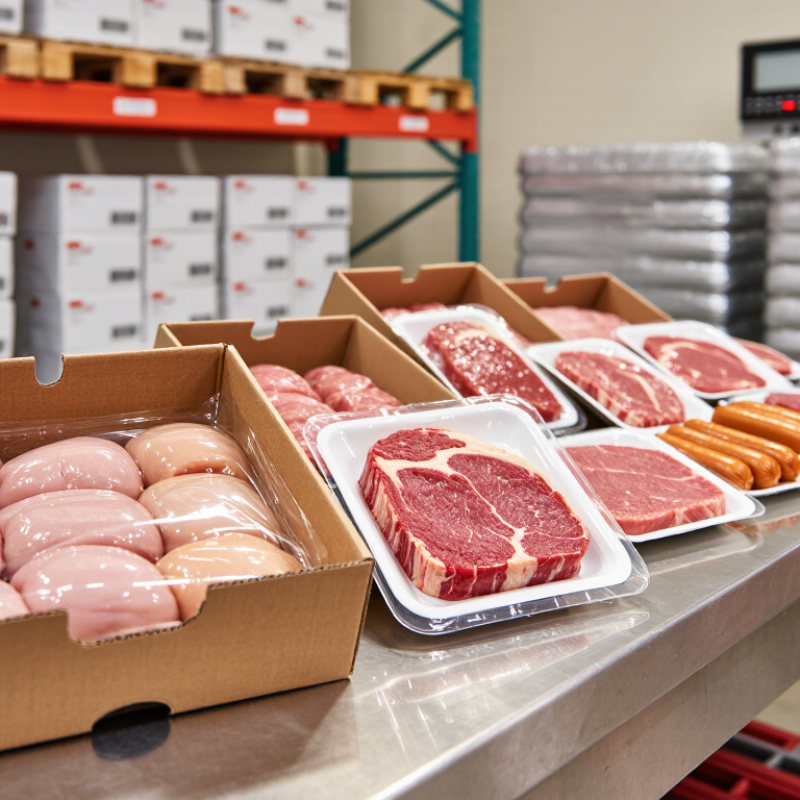
What Are the Best Meat Products for Global Buyers in 2026?
Key Criteria for Evaluating Meat Products in 2026
In 2026, global buyers should assess meat products against written specifications, not polished photos. Confirm species, cut, grade, portion weight, fat range, packaging format, and storage temperature. Ask for lot-specific traceability records and quality-test documentation; check that lot codes match carton labels. For frozen goods, inspect seals and ice buildup, then compare sample thaw loss with agreed limits. For chilled items, review delivery temperature records and remaining shelf life on arrival. Small details matter.
Tips: Request a sample from a routine production lot. Record package condition and temperature at receipt, then check weight and appearance after thawing. Keep photos and measurements beside the supplier’s specification.
Compare suppliers by usable yield, freight conditions, and consistency across repeat orders, not just price per kilogram. Ask how seasonal or processing changes may affect the product; vague answers can signal gaps. I would not assume one sample represents every shipment. Repeat checks can feel tedious, but they may catch variation before it becomes an expensive dispute. Check destination-market requirements with qualified compliance staff, since documentation and labeling needs can differ.

For global buyers, meat categories serve different kitchens and supply chains. Beef is commonly traded as steaks, lean trim, and manufacturing cuts for retail, food service, or ground products. Pork suits fresh cuts, cured foods, and prepared meals, while poultry offers versatile portions such as breast fillets, thighs, and wings. Lamb and mutton often supply specialty retail and traditional cuisines, with demand varying by market.
Formats matter. Chilled meat can support short delivery routes and fresh counters, while frozen cartons help buyers manage longer transit and storage. Bone-in cuts may fit traditional cooking, but boneless portions can simplify portion control in restaurants. Edible offal also has established food uses in some markets, though demand and product specifications differ widely. Clear carton labels, cut names, weight ranges, and temperature records help reduce misunderstandings between suppliers and buyers.
A purchasing plan should match the product to its final use, not just its quoted price. A low-cost cut may create more trimming waste or fail to suit a menu. Cold chain matters. Buyers should confirm shelf-life expectations, packaging, origin documentation, and the destination market’s current import requirements before shipment. These details are easy to overlook, and even a well-planned order can need adjustment when consumer preferences shift.
Fresh, frozen, and processed meat serve different buying needs. Fresh meat suits nearby markets, restaurants, and retailers that value a firm texture and recently cut appearance. It requires dependable chilled transport, clear temperature records, and quick turnover. Even a brief delay can affect quality. Frozen meat allows more flexible shipping and stock planning, especially when demand changes by season. Buyers should inspect carton seals, cut sizes, and signs of thawing or refreezing. Frost inside a package may suggest temperature changes, but it is not proof on its own.
Processed meat, including cured, cooked, or portioned products, can simplify preparation and support consistent serving sizes. It may also require less kitchen labor. Yet processing methods, ingredients, packaging, and storage needs vary widely. Compare specifications carefully rather than assuming every product has the same shelf life or cooking performance. The choice is rarely tidy. A low price per kilogram may mean little if trimming losses, storage costs, or customer preferences are overlooked.
Tips: Match format to delivery distance and expected turnover. Request product specifications, storage guidance, and sample packs. Check how each format performs after thawing or cooking. Keep notes; one trial can reveal details a product sheet misses.
Global buyers should match products to regional demand, not simply chase the lowest quotation. The OECD-FAO Agricultural Outlook 2024–2033 projects poultry to account for nearly half of additional meat consumption over the outlook period. This favors adaptable items such as boneless cuts and portion-sized packs, but local preferences still matter. Buyers in some markets prefer whole birds; others want trimmed portions for food service. Details matter.
Import rules can determine whether a shipment clears smoothly. The European Union requires eligible countries and establishments, alongside official health certificates and relevant TRACES procedures. The United States relies on FSIS equivalence and eligible-country and establishment lists. China requires overseas food manufacturers to complete applicable GACC registration. Requirements can change, so confirm them with the destination authority before contracting. A certificate mismatch can delay release.
Regional checks should go beyond paperwork. In Gulf markets, confirm the importing country’s halal requirements and accepted certification arrangements. For every destination, match product descriptions, establishment numbers, lot codes, and certificate details. Check the permitted shelf life on arrival, not just the production date. Ask for temperature records, too. Cold-chain failures hurt. OECD-FAO projections guide planning, but they cannot predict a buyer’s exact cut preferences or seasonal demand. Verify both with recent customs data and local importers.
A practical, qualitative sourcing guide to meat categories with established import markets. Demand signals are indicative, not market-size rankings; product eligibility and import rules vary by origin, species, product form, and shipment.
| Market / Region | Meat Products with Established Import Interest | Indicative Buyer Demand and Sourcing Considerations | Key Import and Regulatory Requirements | Official Guidance |
|---|---|---|---|---|
| China East Asia |
Beef, pork, poultry, and selected offal or processed meat products | Buyers commonly assess frozen and chilled cuts, manufacturing meat, and products suited to food-service or further processing. Demand and eligibility are sensitive to domestic supply, price, and animal-disease restrictions. | Import eligibility is product- and origin-specific. Overseas food manufacturers exporting to China generally need registration under GACC rules, including Decree 248 where applicable. Shipments may require an approved establishment, the relevant health certificate, and compliance with the applicable bilateral protocol and Chinese food-safety standards. | General Administration of Customs of China (GACC) |
| Japan East Asia |
Beef, pork, and poultry; product eligibility differs by country and species | Importers source a range of chilled and frozen cuts for retail, food service, and processing. Consistent specifications, traceability, cold-chain performance, and compliance with Japanese residue limits are important purchasing considerations. | Food imports require notification to the Ministry of Health, Labour and Welfare under the Food Sanitation Act. Animal products are also subject to Animal Quarantine Service requirements; permitted origins, certificates, treatments, and restrictions depend on the commodity and animal-health status. |
MHLW: Imported Foods Animal Quarantine Service |
| European Union Europe |
Beef, pork, poultry, and sheep or goat meat | Buyers may source both consumer-ready cuts and raw material for processing. Market access and commercial specifications can differ across member states, while animal welfare, food safety, traceability, and sustainability information can influence procurement. | Imports generally require an eligible exporting country or region and an approved establishment for the relevant product. Consignments must meet EU animal-health and public-health conditions, arrive with the required official certification, and undergo the applicable border-control procedures, including advance notification through TRACES where required. | European Commission: TRACES |
| United States North America |
Beef, pork, poultry, and certain processed meat products from eligible origins | Import opportunities include retail cuts and ingredients for food manufacturing. Buyers typically assess origin eligibility, product specifications, food-safety controls, and the documentation needed for the intended use. | Meat and poultry products are generally eligible only from countries with the relevant FSIS-equivalent inspection system and from approved establishments. Shipments need required certification and are subject to import reinspection; animal-health restrictions may also apply through USDA APHIS. | USDA FSIS: Importing Products |
| Saudi Arabia Gulf region |
Beef, poultry, sheep meat, and goat meat | Halal-compliant products are central to sourcing. Buyers may consider frozen and chilled cuts, whole poultry, and products for food service or processing. Pork is not a viable import category for this market. | Importers must verify that the country and establishment are approved for the product. Shipments generally require official veterinary health documentation and halal certification accepted by the relevant Saudi authorities. Labeling, product standards, and certificate requirements should be checked for each shipment. | Saudi Food and Drug Authority (SFDA) |
| Singapore Southeast Asia |
Beef, pork, poultry, and processed meat products from approved sources | As a highly import-dependent food market, Singapore offers buyers a broad range of imported meat categories. Chilled and frozen products serve retail, food service, and food manufacturing; reliable logistics and clearly defined product specifications are important. | Meat products must come from sources and establishments approved by the Singapore Food Agency for the relevant category. Importers need the appropriate licence and consignment permit, and shipments must meet applicable health-certificate, food-safety, and labeling requirements. | Singapore Food Agency: Commercial Food Imports |
Buyer check: Before contracting or dispatch, confirm current country and establishment eligibility, product-specific certificates, disease-related restrictions, labeling rules, and any permit requirements with the destination authority and importer. Requirements can change and may differ between chilled, frozen, raw, and processed products.
What Are the Best Meat Products for Global Buyers in 2026?
How Buyers Assess Suppliers and Product Specifications
Global demand gives buyers a useful starting point, not a buying decision. The OECD-FAO Agricultural Outlook 2024–2033 projects meat consumption to rise 12% by 2033, with poultry accounting for nearly half of the increase. FAO’s Food Outlook, June 2024, forecast global meat production at about 365 million tonnes in 2024. These figures point to strong demand, but product fit still depends on the destination market and intended use.
Compare suppliers against a written specification: species, cut, fat level, weight range, trim, temperature, packaging, and remaining shelf life. Ask for recent product samples, batch records, and clear traceability documents. Then compare usable yield, not just price per kilogram. Consistency matters. A low quote can become costly if cartons contain uneven cuts or excess trim. Buyers should also confirm how suppliers manage temperature during storage and transport. Small details are easy to overlook.
Tips: Send the same specification to every supplier. Request photos of packed cartons and a sample label before ordering. Check tolerances for weight and fat content. If a supplier’s answer is vague, ask again in writing. A perfect checklist is unlikely; revise it after each shipment, and record what failed as well as what worked.
USDA-recommended minimum internal cooking temperatures provide a practical food-safety reference when reviewing meat product specifications.
Whole cuts should rest for 3 minutes after cooking. These are safe-cooking benchmarks, not substitutes for buyer-specific supplier or import requirements. Source: USDA FSIS Safe Temperature Chart.