China Best Food Drying Equipment for Global Buyers
Choosing China’s best food drying equipment requires more than comparing prices, stainless steel grades, or attractive product photos. Global buyers must examine drying performance, energy use, hygiene design, temperature control, and after-sales support. A machine suitable for sliced mango may not handle herbs, mushrooms, meat, or medicinal plants equally well. Product size, moisture content, loading capacity, and target shelf life all influence the correct configuration.
Practical evaluation begins with evidence. Ask suppliers for test-drying records, material certificates, electrical specifications, airflow data, and clear cleaning procedures. Inspect whether product-contact parts use appropriate food-grade materials and whether the design supports reliable sanitation. Experienced manufacturers should explain heat-pump, hot-air, vacuum, or microwave-assisted systems without hiding operational limits. They should also clarify installation requirements, spare-parts availability, operator training, and maintenance schedules.
Details matter.
A dependable supplier will discuss local voltage, climate, shipping conditions, and applicable food-safety expectations before recommending equipment. Buyers should confirm documentation with qualified inspectors and local authorities, because compliance requirements differ between markets. No machine fits every crop. That assumption can fail. Small pilot tests often reveal uneven airflow, excessive browning, or longer drying times than expected. This is where careful suppliers earn trust: they acknowledge limitations and improve the design instead of promising perfect results. China offers a broad manufacturing base for food drying equipment, but quality varies between factories. Careful comparison, factory verification, sample testing, and written specifications help buyers make a safer, more informed investment.
What Food Drying Equipment Does and Why It Matters for Global Buyers
China Best Food Drying Equipment for Global Buyers
Food drying equipment removes moisture, slows microbial growth, and extends shelf life without relying solely on cold storage. Moisture is the real battleground. FAO’s The State of Food and Agriculture 2019 estimated that 14% of global food is lost between harvest and retail. The UNEP Food Waste Index Report 2024 also recorded 1.05 billion tonnes of food waste in 2022. These figures explain why controlled drying matters for fruits, vegetables, grains, meat, and herbs. A well-designed dryer can reduce transport weight, stabilize seasonal supply, and create export-ready products. It cannot rescue poor raw materials.
Global buyers should examine more than drying capacity. Ask for final moisture consistency, water activity, temperature uniformity, energy use per kilogram of water removed, and cleaning access. Hot-air systems suit many products, while vacuum or heat-pump drying may better protect color, aroma, and heat-sensitive nutrients. In practical factory checks, uneven airflow often causes overdried edges and soft centers. That problem is easy to overlook. Product trials should measure drying curves, not just hourly output. Hygienic design should follow recognized food-safety principles, including Codex General Principles of Food Hygiene CXC 1-1969, revised in 2022. Buyers also need electrical compatibility, documentation, spare parts, operator training, and verified performance under local conditions. The cheapest quotation may become the most expensive decision.
Key Types of Food Dryers Made in China
China Best Food Drying Equipment for Global Buyers
Key Types of Food Dryers Made in China
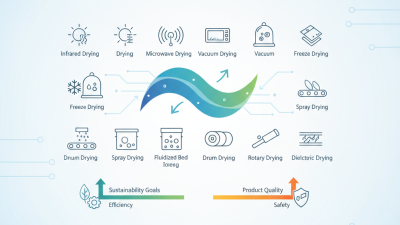
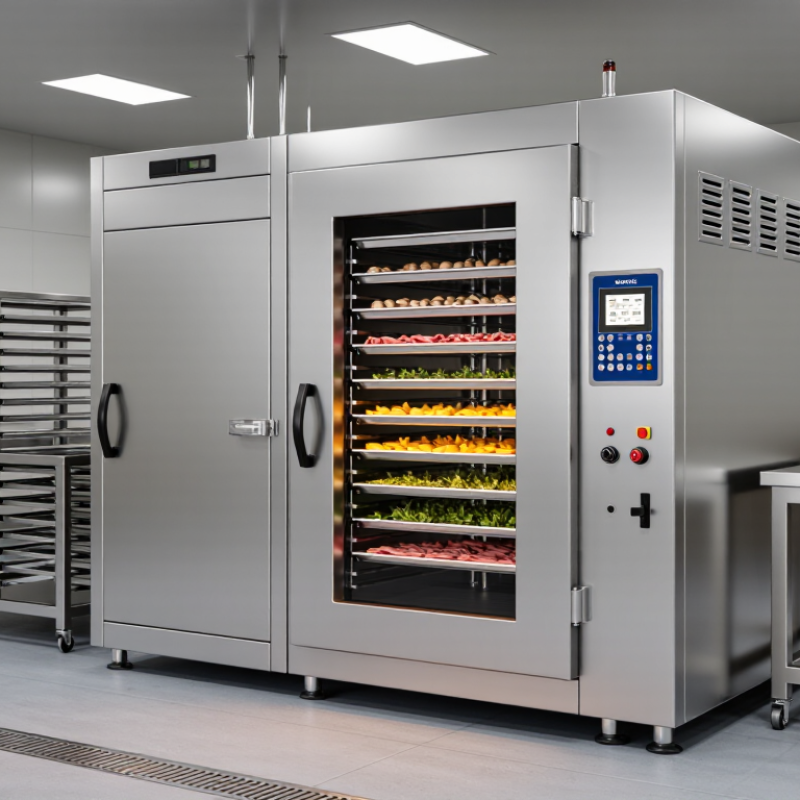
China’s food-drying equipment covers several practical processing needs. Hot-air tray dryers suit fruits, vegetables, herbs, and small production batches. They use heated air across shallow trays, making inspection simple. Continuous belt dryers support larger volumes, with adjustable temperature and belt speed. They are useful for sliced produce, grains, and medicinal food ingredients. FAO’s Food Loss Index reported that 13.2% of food was lost globally between harvest and retail in 2021. Better drying can reduce part of this loss when moisture control is reliable.
Vacuum dryers remove moisture at lower temperatures. They help protect color, aroma, and heat-sensitive nutrients. Freeze dryers provide stronger quality retention, but they require more energy and longer cycles. Spray dryers convert liquid products into powder through atomization. This design fits milk alternatives, juices, and extract-based ingredients. For buyers, stainless-steel contact surfaces, cleanable pipework, airflow uniformity, and automatic temperature recording matter more than appearance.
In practice, I would not select equipment from capacity alone. A 500-kilogram claim may refer to fresh material, not finished output. That difference is important. The 2024 UNEP Food Waste Index estimated 1.05 billion tonnes of food waste in 2022, showing the scale of preservation challenges. Buyers should request test drying with their own material. Moisture content, water activity, color change, energy use, and drying time need written records. No dryer is universally best. Some specifications still look convincing, but real samples may disagree.
China Best Food Drying Equipment for Global Buyers
Key Types of Food Dryers Made in China
Representative process-temperature ranges for common industrial food-drying technologies. Spray drying uses inlet-air temperature, while freeze drying reflects the typical shelf or product-temperature stage.
Actual settings vary by food product, moisture content, throughput, and equipment configuration.
How to Match Dryer Design With Food and Production Needs
China Best Food Drying Equipment for Global Buyers
How to Match Dryer Design With Food and Production Needs
Choosing a food dryer should begin with the product, not the machine’s appearance. Apple slices need gentle, even airflow to preserve color and texture. Herbs require lower temperatures because their aroma compounds can disappear quickly. Mushrooms may need stronger air movement and longer drying stages.
Moisture level, slice thickness, and daily output shape the design. A small processor may benefit from a cabinet dryer with removable trays. Larger operations often need continuous airflow, automatic temperature control, and easy product loading. Stainless steel contact surfaces support hygienic cleaning. Smooth corners also reduce residue buildup after each batch.
Production testing matters. Record inlet temperature, outlet humidity, drying time, and final moisture content. A trial with 20 kilograms of sliced fruit can reveal uneven airflow before full installation. It is easy to choose capacity by numbers alone. That can be a mistake. Oversized chambers may waste heat when production is still limited. We have also seen operators underestimate cleaning time, especially around door seals and tray edges. The better design is not always the most powerful one. It is the one that protects food quality while fitting labor, space, energy, and future demand.