How to Choose the Right Processing Equipment?
Choosing the right processing equipment is rarely a simple matter of comparing prices and catalog specifications. The better decision begins with the material, the process conditions, and the final product requirements. Powder, liquid, slurry, and fragile solids behave differently inside a machine. Moisture, temperature, particle size, viscosity, and contamination risks can change the entire selection.
Dr. David Mills, a respected pneumatic conveying specialist, has stated, “There is no single best system for conveying a material.” This principle applies across the processing equipment industry. A machine that performs well in a laboratory may struggle under continuous production. A high-speed mixer may damage delicate particles. A low-cost pump may require frequent maintenance when handling abrasive fluids. Small details matter.
Start with measurable needs. Define the required capacity, operating hours, cleaning method, utility demand, and acceptable product loss. Then examine equipment reliability, operator safety, spare-part availability, and future expansion. Request practical trial data when material behavior is uncertain. Watch the discharge. Check the residue left inside. Ask how quickly worn parts can be replaced.
The cheapest option can become expensive.
A useful evaluation should include total ownership cost, not only the purchase price. Energy consumption, downtime, labor, sanitation, and maintenance often decide the real outcome. Even experienced teams can overlook one factor. That is worth admitting. A neat spreadsheet cannot fully reproduce changing production conditions.
This guide explains how to compare processing equipment with clearer judgment. It focuses on performance, risk, flexibility, and long-term value, helping buyers select equipment that fits the process rather than forcing the process to fit the machine.
Define the Processing Requirements and Production Goals
Choosing processing equipment starts with defining the job, not browsing catalogs.
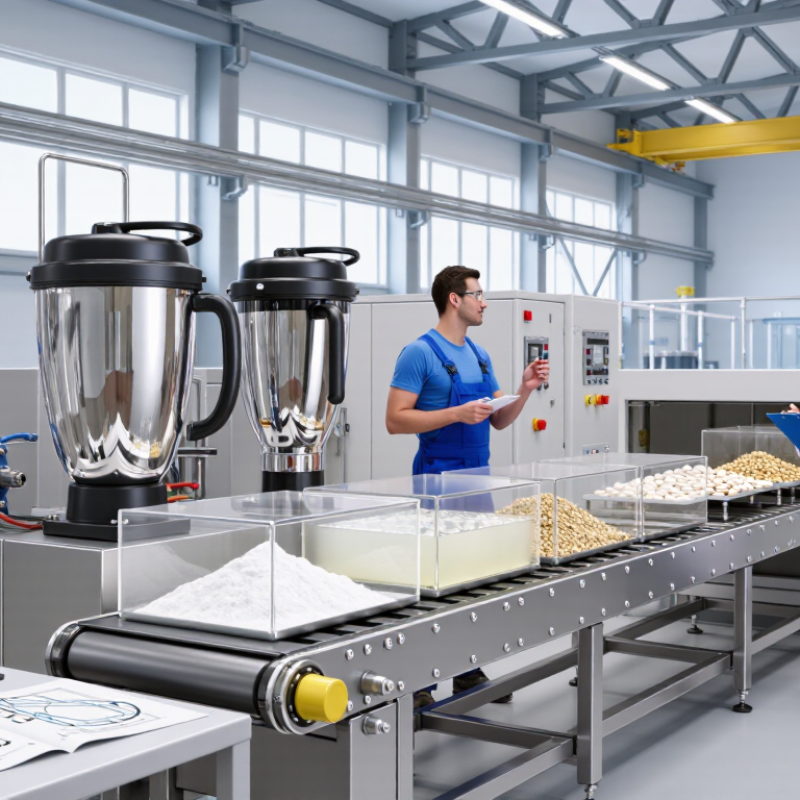
Record material properties, target throughput, batch size, product tolerances, cleaning needs, and available utilities. A powder line may require humidity control, while a liquid process may need precise temperature stability. Measure real production data across several shifts. One clean trial is not enough.
Set goals with numbers:
500 kilograms per hour,
less than 2% waste,
ten-minute changeovers,
or 95% equipment availability.
The International Energy Agency reports that industry used about 37% of global final energy in 2022, so energy demand deserves a place in the specification. The U.S. Department of Energy also notes that compressed air can consume 10–30% of a plant’s electricity. Small leaks can become expensive surprises.
Ask suppliers to test your actual materials and document results.
Check discharge quality, noise, heat, cleaning time, and operator access. Include peak demand, not only the comfortable average. Production targets often look precise on paper. They may ignore sticky material, seasonal humidity, or delayed maintenance. That is where plans become weak. A useful specification records assumptions, test conditions, acceptance limits, and the evidence behind each figure. It should also leave room for revision when pilot data challenges the original goal.
Compare Equipment Types and Core Operating Principles
How to Choose the Right Processing Equipment?
Compare Equipment Types and Core Operating Principles
Choosing processing equipment starts with the material, not the catalogue. Pumps move liquids through pressure differences. Mixers create shear, folding, or turbulence. Centrifuges separate phases through rotational force. Filters retain particles by pore size or surface capture. Thermal systems transfer heat through conduction, convection, or steam. Each principle leaves a different fingerprint on viscosity, temperature, moisture, and product quality.
Batch equipment offers control and flexible changeovers. Continuous equipment can deliver steadier output and lower labor demand. The choice depends on volume, variation, cleaning time, and process risk. The International Energy Agency reports that industry uses about 37% of global final energy. Small efficiency losses matter. The U.S. Department of Energy also notes that compressed-air leaks can waste 20–30% of compressor output. That makes pressure, sealing, and maintenance practical selection criteria.
I have seen teams compare motor ratings while ignoring residence time. That mistake is expensive. A high-speed mixer may damage fragile particles, while a slow mixer leaves dead zones. FAO’s State of Food and Agriculture 2019 estimated that 14% of food is lost between harvest and retail. Gentle conveying and accurate temperature control can reduce avoidable losses. Test the real feedstock, including its worst viscosity and moisture. Measure energy per batch, cleaning water, noise, and operator access. The “best” machine may still fail during sanitation or seasonal production. Pilot trials expose those uncomfortable gaps.
How to Choose the Right Processing Equipment?
Comparison of typical size-reduction ratios and core operating principles
Jaw crusher: Compression between fixed and moving plates; suited to coarse primary crushing.
Cone crusher: Compression and interparticle crushing; suited to controlled secondary or tertiary crushing.
Hammer mill: Impact from rapidly rotating hammers; suited to friable materials and higher reduction ratios.
Ball mill: Impact and abrasion from tumbling media; suited to fine grinding and narrow particle-size targets.
The ranges are representative industry-typical size-reduction ratios. Actual performance depends on feed size, hardness, moisture, product specification, and operating conditions.
Evaluate Capacity, Materials, Accuracy, and Automation Features
Choosing processing equipment starts with the work, not the brochure. In plant reviews, I compare required output with peak demand, cleaning time, and planned expansion. A machine rated for 1,000 kilograms per hour may deliver less with sticky or uneven feedstock. Leave practical headroom. Too much capacity can also waste energy and floor space. That trade-off is easy to miss.
Material compatibility needs documented evidence. Check contact surfaces, seals, coatings, and temperature limits against every ingredient or chemical used. Abrasive particles can wear a surface quickly, while moisture may cause swelling, corrosion, or unstable flow. Request test data, inspection records, and a sample trial when possible. I prefer measurements taken under conditions close to production. Laboratory results alone can look reassuring, but they may not predict daily cleaning and operator handling. Maybe we should have tested longer. This is where reliable decisions are built.
Accuracy affects yield, safety, and repeatability. Define acceptable tolerances for weight, temperature, pressure, particle size, or dosing. Then verify how sensors are calibrated and how often records are retained. Automation should reduce variation, not hide it. Look for clear alarms, manual overrides, access controls, and simple data exports. Operators should understand the screen within minutes. Complex interfaces often create workarounds. During commissioning, observe real users, not only engineers. A short trial may reveal delays, awkward access, or false alarms before they become expensive habits. Ask who services the controls and how spare parts are documented. Support quality matters as much as specifications.