How to Choose the Right Switching Power Supply for Your Needs?
Choosing the right Switching Power Supply (SPS) is crucial for any electronic application. An SPS converts electrical power efficiently. It's a versatile component found in many devices, from computers to industrial machines. However, selecting the perfect one can feel overwhelming.
When considering an SPS, think about your specific requirements. Look at the voltage and current ratings to match your project. Size and form factor are also important. You might have space constraints, or need it to fit within a certain design. Noise levels can impact performance. Poor choices here can lead to malfunctioning equipment or reduced efficiency.
Reflect on potential challenges too. Options are plentiful, but too many can cause confusion. Some products may not perform as advertised. Research customer reviews and specifications thoroughly. It’s wise to consider future needs as well. A flexible Switching Power Supply can accommodate upgrades down the line. Take the time to evaluate all aspects, so you make the best choice for your needs.
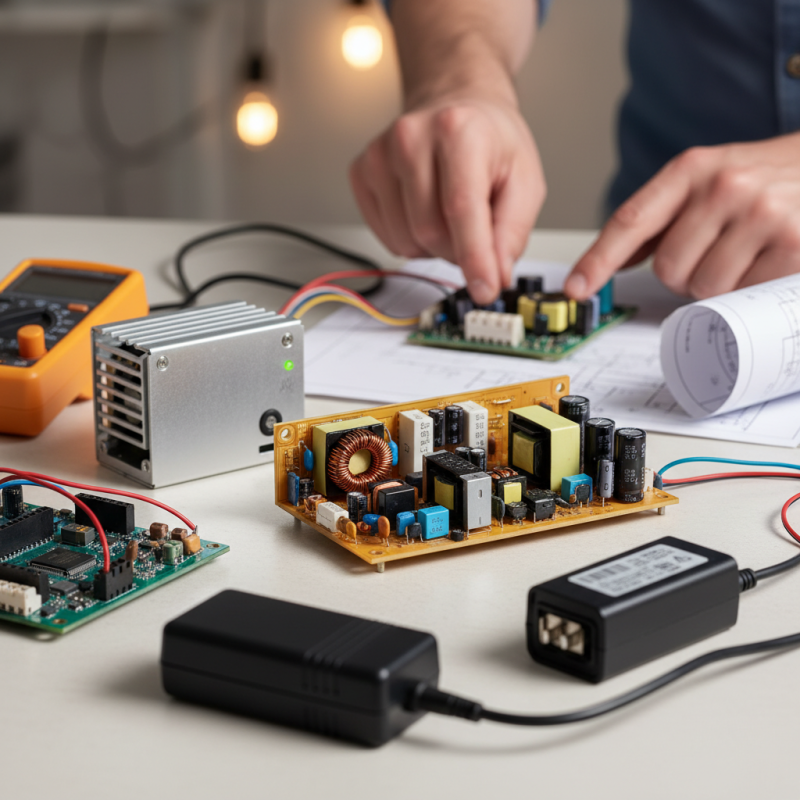
Understanding the Basics of Switching Power Supplies
Switching power supplies (SPS) are crucial in modern electronics. They convert electrical power efficiently, often exceeding 90% efficiency in high-quality units. Understanding their basics can help you choose the right one for your requirements. Key parameters include input voltage, output voltage, and load regulation. The operational environment, like temperature and humidity, also matters.
SPS come in various types. The most common include buck converters and boost converters. A report by Mordor Intelligence suggests that the global market for SPS is expected to grow by 7% annually, reflecting rising energy demands. Additionally, improper sizing can lead to inefficiencies. A unit that’s too small may overheat, while one that’s too large can waste energy.
Diving deeper into components, consider the design. Filter capacitors impact the noise performance significantly. Noise in sensitive equipment can be disruptive, creating concerns in applications like medical devices. A flawed power supply design may introduce unforeseen complications. Evaluating these aspects takes time but is essential for selecting an SPS that meets both performance and safety standards.
Identifying Your Power Requirements and Specifications
When choosing a switching power supply, understanding your power requirements is crucial. Begin by assessing the voltage and current needs of your devices. For example, a microcontroller might need 5V at 500mA. Conversely, a motor may need 24V at 2A. Calculate the total wattage by multiplying voltage and current. This step ensures you don’t select a power supply that underperforms.
Consider the efficiency rating as well. A supply with lower efficiency may lead to excess heat and energy waste. Some may overlook this detail, thinking all supplies are equal. It’s essential to check the specifications on the datasheet for this information. Additionally, factor in any peak loads. Devices may need more power during startup or operational bursts. Failing to account for these peaks could result in unexpected failures.
Lastly, think about form factor and cooling solutions. Many supplies are compact, but some applications require specific sizes. Poor ventilation can lead to overheating, affecting performance. While managing these aspects requires careful planning, don’t hesitate to seek guidance from experts. Power supplies are not one-size-fits-all. Investing time in this process can lead to significant long-term benefits.
Power Supply Efficiency Comparison
This chart compares the efficiency of different power supply types based on their output power in watts.
Evaluating Efficiency and Performance Ratings
When evaluating switching power supplies, efficiency is a key factor. Efficiency is often measured as a percentage. A higher percentage means less wasted energy. It’s ideal to look for units that exceed 80% efficiency. However, achieving such ratings can sometimes result in higher upfront costs. A careful consideration of your budget and long-term savings is crucial.
Performance ratings also play a significant role. These ratings indicate how well the power supply can handle varying loads. Load stability is important for sensitive electronics. Over time, some supplies may struggle under fluctuating demands. This could lead to decreased performance or damage. Checking the load regulation specification helps to prevent these issues.
Additionally, consider thermal performance. Power supplies generate heat during operation. Poor thermal management can lead to failures. Some designs may require additional cooling methods. It's essential to ensure reliability in your application. Reflecting on these aspects can guide you to a suitable choice. Each parameter carries weight and should be aligned with your specific needs.
How to Choose the Right Switching Power Supply for Your Needs? - Evaluating Efficiency and Performance Ratings
| Model | Output Power (W) | Efficiency (%) | Input Voltage (V) | Form Factor |
| PSU Model A | 500 | 85 | 100-240 | ATX |
| PSU Model B | 750 | 90 | 100-240 | SFX |
| PSU Model C | 300 | 80 | 110-220 | Mini-ITX |
| PSU Model D | 600 | 87 | 100-240 | ATX |
| PSU Model E | 450 | 82 | 100-240 | Flex ATX |
Considering Size, Form Factor, and Installation Needs
When selecting a switching power supply, size and form factor significantly impact your choice. Consider where you will install the unit. Measure the available space. It must fit comfortably without overcrowding other components. Keep airflow in mind.
Tips: Always leave room for wires. Tidy cabling can improve airflow and prevent overheating.
Different applications require distinct form factors. For communication systems, small, compact designs are crucial. On the other hand, industrial applications may permit bulkier units. Think about weight too. Heavier supplies might need stronger mounting brackets.
Tips: Check the power supply's dimensions in detail. Compare them against your device's layout requirements.
Installation needs also matter. Ensure you can access mounting holes easily. This feature helps during maintenance. Poor access can lead to frustration. Choose a unit with a clear layout for input and output connections. Familiarize yourself with your environment. Tools may be needed for proper installation.
Tips: Read the installation manual thoroughly. Knowing the steps ahead can save time later.
Assessing Reliability and Safety Features in Power Supplies
When selecting a switching power supply, reliability and safety features are critical. According to a recent industry report, nearly 40% of power supply failures are related to inadequate thermal management. A power supply must efficiently dissipate heat to avoid overheating. Look for units with built-in thermal protection mechanisms.
It’s also vital to check the safety certifications. An acceptable power supply should meet standards such as UL, CE, and FCC. These certifications indicate that the unit has been tested for safety and compliance with specific regulations. Without them, you might face risks, including electrical shock or equipment damage.
Tips: Evaluate the mean time between failures (MTBF) presented in product specifications. A higher MTBF indicates better reliability. Also, consider surge protection features. Sudden electrical spikes can damage your devices. A good power supply will safeguard against such risks.
Not every option is perfect. Some power supplies may have poor noise performance, impacting sensitive devices. Research customer reviews and technical data to make an informed decision. Understanding the balance of reliability and safety in power supplies ensures you choose wisely for your needs.
