What Are Drying Solutions and How Do They Work?
Drying solutions remove moisture from products, materials, or gases through controlled heat and mass transfer. They support food processing, pharmaceuticals, chemicals, agriculture, and advanced manufacturing. The basic principle is simple. Warm air, vacuum, infrared energy, microwaves, or desiccants draw moisture toward a lower concentration.
The challenge is not simple.
The U.S. Department of Energy reports that process heating represents about 51% of industrial energy use. Drying is only one part of that demand, but inefficient systems can still waste substantial heat. The International Energy Agency also identifies industrial efficiency and heat recovery as major routes toward lower energy consumption. These findings make equipment selection more important than ever.
Arun S. Mujumdar, a leading drying-technology researcher, describes drying as “a complex operation involving simultaneous heat and mass transfer.” His observation explains why temperature alone cannot define performance. Air velocity, humidity, residence time, product thickness, and final moisture targets all matter. A food manufacturer may need gentle, even drying, while a chemical producer may require strict solvent control and continuous monitoring.
Effective drying solutions combine sensors, airflow design, insulation, heat recovery, and process automation. They should protect product quality while reducing energy use and operating costs. However, no single technology works everywhere. A low-temperature system may preserve sensitive materials but increase drying time. A high-temperature system may improve throughput but damage colour, texture, or active ingredients.
That trade-off deserves careful testing, not confident assumptions. The best solution begins with measured moisture behaviour, verified energy data, and realistic production conditions.

What Drying Solutions Are and What They Are Designed to Do
Drying solutions are systems designed to remove unwanted moisture from air, materials, surfaces, or packaged goods. They use refrigeration, desiccant media, heated airflow, vacuum, or membranes. The right method depends on the moisture load, temperature, material sensitivity, and required dryness level. It is not simply “make it hotter.”
In compressed-air systems, drying equipment helps prevent condensation, corrosion, frozen lines, and unstable pneumatic tools. The U.S. Department of Energy reports that compressed-air leaks can waste 20–30% of compressor output. Poor moisture control can increase that waste through pressure drops and maintenance problems. ISO 8573-1 also classifies compressed-air purity by water content, showing why measurable dew point matters. A technician may check the drain, dew point, and outlet temperature before changing the dryer setting. Small details matter.
For buildings and stored products, dehumidifiers reduce relative humidity and support safer conditions. The U.S. Environmental Protection Agency recommends keeping indoor humidity between 30% and 50% to limit moisture-related problems. Industrial dryers also protect powders, grains, plastics, pharmaceuticals, and electronic parts from clumping or surface damage. The first setting is rarely perfect. Over-drying can waste energy or harm a product, while under-drying leaves hidden moisture inside. Regular sensor checks and moisture testing are therefore more reliable than relying on touch alone.
The Science and Basic Principles Behind Drying Processes
What Are Drying Solutions and How Do They Work?
Drying solutions remove moisture from materials, products, or enclosed spaces. The basic science depends on heat, airflow, and humidity. Heat gives water molecules more energy, while airflow carries vapor away from the surface. Moisture moves from wetter areas toward drier areas. This movement is called moisture diffusion.
Heat alone is not enough. If surrounding air becomes saturated, evaporation slows sharply. Effective drying therefore controls air temperature, velocity, and relative humidity together. A warm, moving air stream can dry a surface quickly, but excessive heat may cause cracking, shrinkage, discoloration, or surface hardening. Materials respond differently. Wood, food, textiles, and building materials each release moisture at different rates.
A reliable process begins with measurement. Technicians may check weight loss, surface temperature, internal moisture, and room humidity. These details show whether drying is progressing evenly. A simple example is a damp wooden panel: its surface may feel dry while its center remains wet. That mismatch can create warping later.
Real conditions are rarely perfect. Small temperature changes can alter the drying rate. Airflow may also leave hidden corners untreated. A practical trial should include several measurement points and regular inspections. The target is not always the lowest possible moisture level. Over-drying can waste energy and damage quality. The correct endpoint depends on the material’s intended use, structure, and safe moisture range. Further testing may still be necessary.
What Are Drying Solutions and How Do They Work?
Drying removes moisture by creating a vapor-pressure difference between wet material and the surrounding air. As temperature increases, water’s saturation vapor pressure rises, giving moisture a stronger driving force to evaporate when the air is not saturated.
The values show the approximate saturation vapor pressure of water at sea-level pressure. Higher vapor pressure generally supports faster evaporation, provided that airflow removes moisture vapor and the surrounding air has enough capacity to absorb it.
Key Types of Drying Solutions and Their Typical Applications
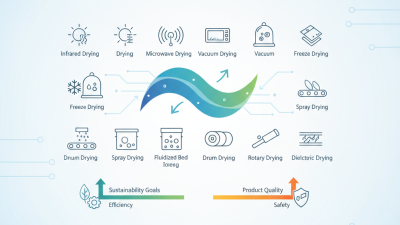
Drying solutions remove moisture from solids, liquids, or gases through controlled heat, airflow, pressure, or moisture capture. Their purpose is not simply making materials dry. They also protect texture, stability, weight, and storage life. In practice, the correct method depends on moisture level, temperature sensitivity, throughput, and energy limits. Small details matter. A few degrees can change color or product strength.
Hot-air convection systems circulate heated air across trays, belts, or rotating drums. They suit grains, vegetables, timber, and treated sludge.
Desiccant drying uses moisture-absorbing media and works well for compressed air, electronics, and humidity-sensitive powders.
Vacuum drying lowers boiling temperature, making it useful for heat-sensitive chemicals, extracts, and precision components.
Freeze drying removes ice under low pressure. It preserves porous structure, but it usually needs more time and energy.
Infrared systems heat surfaces directly, often supporting coatings, textiles, and thin food layers.
Application decisions should include airflow uniformity, final moisture targets, cleaning access, and measurement methods. Food processors may prioritize gentle drying and even color. Pharmaceutical facilities need controlled conditions and documented validation. Workshops drying wood often focus on internal moisture gradients, not surface appearance alone. In field testing, a faster cycle has sometimes produced uneven cores. That result is easy to miss. Sensors help, but sensors can drift and require checking. No drying solution is universally best. Trial batches, material data, and operator feedback should guide the final design.
How Drying Solutions Work in Different Materials and Environments
What Are Drying Solutions and How Do They Work?
Drying solutions remove unwanted moisture from materials, rooms, or stored products. They combine airflow, controlled heat, dehumidification, or moisture-absorbing agents. The suitable method depends on the material’s structure, moisture level, and surrounding climate.
Porous Materials
Porous materials, such as timber, fabric, and insulation, often need steady airflow and reduced humidity. Moisture moves slowly. Excessive heat can warp wood, weaken adhesives, or shrink textiles. A technician should check temperature and relative humidity throughout the process. Moisture meters also help locate damp areas that feel dry on the surface.
Dense Materials
Dense materials behave differently. Concrete and masonry may release moisture gradually from deep layers. They often require longer drying periods and continuous air circulation. In cold environments, gentle heating can improve evaporation, but sealed spaces may trap vapor. Ventilation or dehumidification becomes essential there. That part matters.
Specialized Drying Methods
Desiccants can work well in enclosed containers or sensitive equipment because they remove vapor without high temperatures. Vacuum drying may shorten drying time for selected materials, but it requires careful pressure control. No method is perfect. Results can vary with hidden cracks, uneven airflow, and inaccurate readings. A reliable assessment should compare measurements before, during, and after treatment. Rushing the process remains a common mistake.
Factors That Influence Drying Speed, Quality, and Efficiency
Drying solutions remove moisture from materials through heated air, vacuum, desiccants, or controlled airflow. Their performance depends on how heat and moisture move through the product. A thin coating may dry within minutes, while a dense component can stay damp inside. The surface can look ready too early.
Temperature strongly affects drying speed, but hotter is not always better. Excess heat may cause cracking, discoloration, shrinkage, or a hardened outer layer. Relative humidity matters too. Moist air slows evaporation, especially when the material already holds substantial water. Air movement helps replace saturated air near the surface. Small changes matter.
Material thickness, porosity, and moisture distribution influence quality. In practical testing, weighing samples at set intervals can reveal drying progress more accurately than touch alone. A constant airflow pattern also improves consistency across trays or chambers. Uneven spacing creates wet corners and over-dried edges. This is easy to overlook. I have seen operators increase heat when airflow was the real problem. That choice reduced quality and wasted energy.
Efficient drying balances speed, energy use, and the required final moisture level. Sensors can track temperature and humidity, but they still need proper placement and calibration. Product temperature may differ from chamber temperature by several degrees. A small test batch is useful before full production. Results may vary between batches, so drying settings should be reviewed rather than copied blindly. The most reliable process uses measured data, visible inspection, and occasional laboratory moisture checks.