How to Dry Food Effectively for Long Term Storage?
Drying food is an ancient preservation method that has gained renewed attention. According to the USDA, dried fruits and vegetables retain more nutrients than canned ones. This makes drying an effective and efficient technique for long-term food storage. The global dried food market is expected to reach $60 billion by 2025, reflecting a growing interest in healthier food options.
To dry food effectively, understanding the process is crucial. Utilizing methods like air drying, sun drying, or using dehydrators can significantly enhance shelf life. However, improper drying may lead to spoilage or pest infestations. Studies indicate that home-dried foods can lose up to 20% of their nutrients if done incorrectly.
While drying food has many benefits, it is essential to reflect on the technique's limitations. Not all foods dry well, and some lose texture. Additionally, moisture levels can be tricky to manage, impacting flavor and safety. Mastering drying food requires practice and attention to detail.
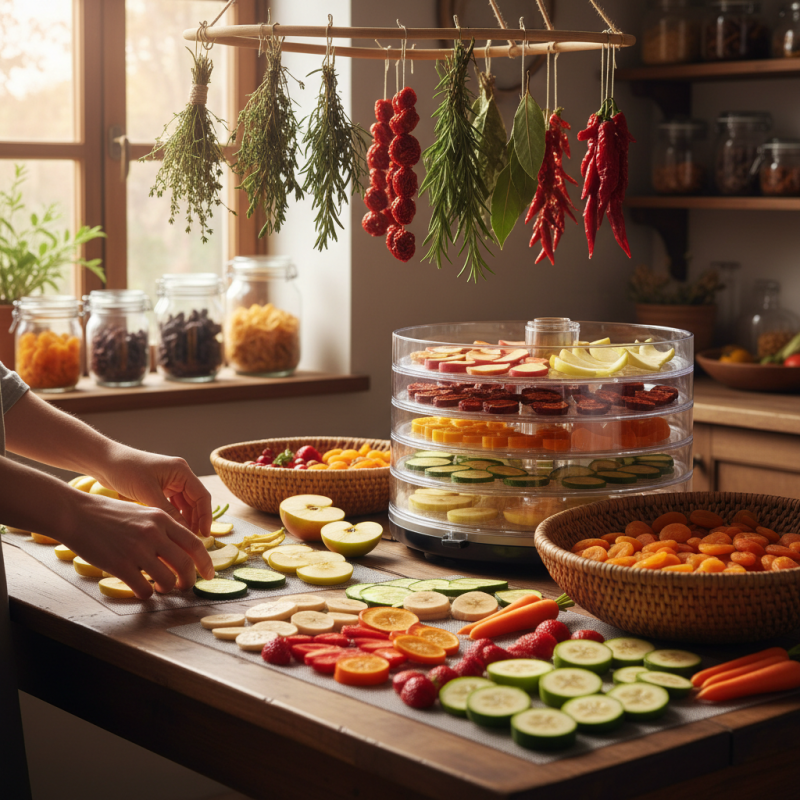
Understanding the Importance of Food Drying for Preservation
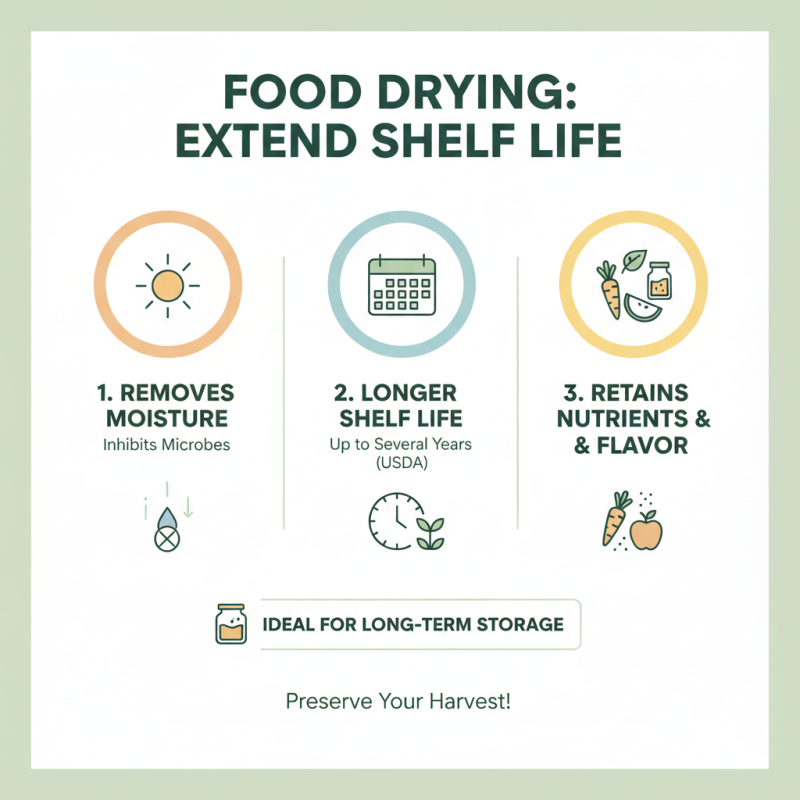
Food drying is an essential preservation method. This technique removes moisture, inhibiting microbial growth. According to the USDA, the right drying can extend food’s shelf life up to several years. Dried foods retain nutrients and flavors, making them ideal for long-term storage.
Some may overlook the importance of proper drying. Inadequate removal of moisture leads to spoilage. A study published in the Journal of Food Science revealed that improper drying could allow bacteria to thrive. Investing in effective drying methods, such as dehydration or air drying, is vital for ensuring safety and quality.
Tips for effective drying: Ensure uniform slices of food. Even thickness ensures consistent drying. Store dried foods in airtight containers. This prevents moisture re-entry. Monitor humidity levels in storage areas. High humidity can compromise your efforts. Remember, patience is key; rushing the process can lead to disappointing results. Drying food is an art and a science, requiring careful attention to detail.
Types of Food Suitable for Drying and Their Benefits
When considering food drying, many types stand out. Fruits like apples and bananas offer natural sweetness. They become chewy and concentrated in flavor. Vegetables such as tomatoes and peppers retain nutrients and provide rich taste. However, drying time varies greatly. Factors like thickness and moisture content can alter results.
Herbs are another excellent choice. Storing dried herbs brings out their aroma and taste. They reduce in volume, making storage easier. Nuts and seeds can also be dried. When done right, they last longer without losing crunch. Yet, over-drying can lead to a loss of essential oils.
Each type requires careful preparation. Cutting sizes should be uniform for even drying. Too thick? They may remain moist inside. Not all foods dry well. Some may not retain taste. Thus, experimenting with small batches is recommended. Keep track of successes and failures. This can guide future efforts in food preservation.
How to Dry Food Effectively for Long Term Storage?
| Type of Food |
Suitable Drying Method |
Benefits |
| Fruits (e.g., apples, bananas) |
Dehydration, Sun Drying |
High in fiber, retains vitamins, great for snacks |
| Vegetables (e.g., carrots, peas) |
Dehydration, Oven Drying |
Nutrient retention, lightweight, easy to rehydrate |
| Herbs (e.g., basil, oregano) |
Air Drying, Dehydration |
Intense flavor retention, long shelf life |
| Meats (e.g., beef jerky) |
Dehydration, Smoking |
High protein, portable, great for snacks |
| Grains (e.g., rice, oats) |
Air Drying |
Long shelf life, source of carbohydrates, easy to cook |
Methods of Drying Food: Traditional and Modern Techniques
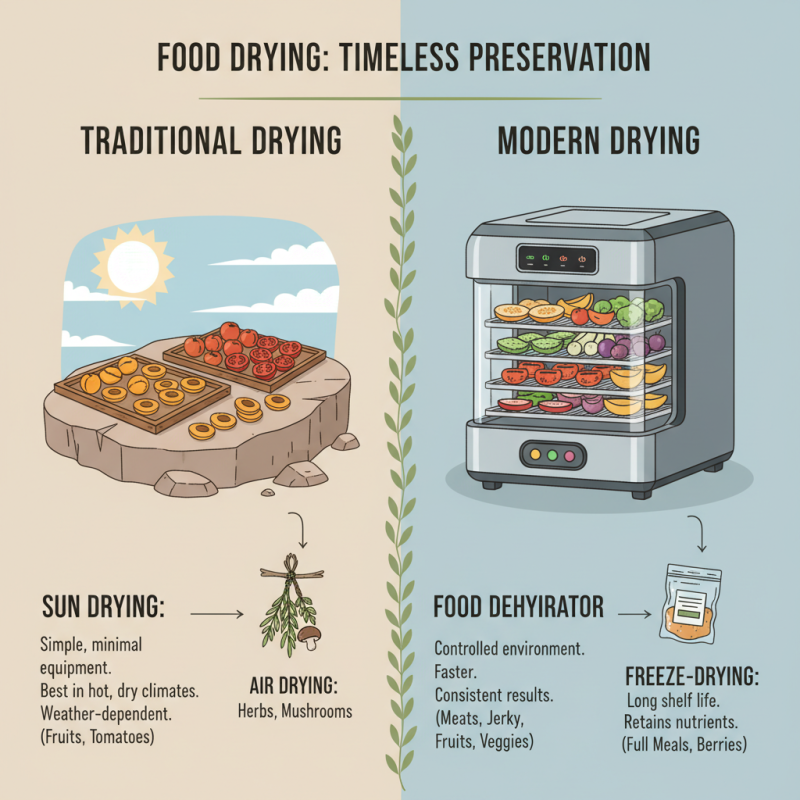
Drying food is a timeless method for preservation. There are both traditional and modern techniques available. Traditional methods include sun drying and air drying. These techniques have been used for centuries. They are simple and require minimal equipment. Sun drying works best in hot, dry climates. Fruits like apricots and tomatoes are great choices. However, this method is weather-dependent, which can be a drawback.
Modern drying methods offer more reliability. Dehydrators are popular for home use. They provide controlled heat and airflow. This produces consistent results and retains more nutrients. Another option is freeze-drying. This process removes moisture at low temperatures. It's more complex and often requires equipment that can be costly. Still, results are impressive.
Each technique has its strengths and weaknesses. While traditional methods rely on nature, they can be unpredictable. Modern techniques give better control but might be expensive. Understanding your needs and resources is critical for effective food drying. Balancing these aspects can help achieve the best results in food preservation.
Essential Tools and Equipment for Effective Food Drying
When it comes to drying food effectively, having the right tools is essential. A food dehydrator stands out as one of the best options. It provides controlled heat and airflow, ensuring even drying. Additionally, a good quality blender helps prepare fruits and vegetables for drying. You can make smoothies or purees, which can then be dehydrated into healthy snacks.
You may also need cutting boards and sharp knives for precise cutting. Uniform sizes will help ensure consistent drying. Parchment paper is useful for lining trays, preventing sticking. Vacuum sealers are important for storage, keeping your dried food fresh longer. Glass jars can serve as an alternative for short-term storage, but they can be fragile.
Don’t forget to monitor humidity levels. It affects drying times and the quality of the end product. Sometimes, things may not go as planned. Overdrying can lead to loss of flavor, while under-drying can result in spoilage. Experimenting with different methods can reveal what works best for your needs.
Effectiveness of Different Food Drying Methods
Best Practices for Storing Dried Food for Longevity
Storing dried food properly is essential for its longevity. First, choose the right containers. Glass jars with tight lids work well. Keep them in a cool, dark place. Light can degrade food quality. Vacuum sealing is also an effective method for long-term storage. It removes air that causes spoilage.
Moisture is another enemy. Ensure food is completely dry before storing. Use a desiccant pack for extra protection. You might forget to check humidity levels, which can spoil your food. Regularly inspect your stored items. Look for signs of mold or pest activity. It’s crucial to keep your storage area clean and dry.
Labeling is important too. Write the date on your containers. Some foods lose quality over time. Rotating your stock is a good practice. Try to use older items first. You might overlook this detail and end up with expired food. Storing dried food takes care and attention, but the reward is worth it.