Why Are Food Processing Pumps Essential for Efficient Production?
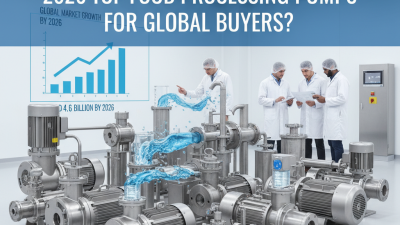
Food processing pumps play a pivotal role in the efficiency of production lines worldwide. According to a report from Market Research Future, the food processing pumps market is projected to grow at a CAGR of 4.2% from 2021 to 2027. This growth can be attributed to the increasing demand for processed foods and the need for better quality and consistency in production. Industry expert Dr. Susan Martinez, a leading figure in food processing technologies, emphasizes, "Efficient pump systems are not just a choice; they are a necessity for modern food production."
The reliability of food processing pumps ensures that the entire production process flows smoothly. Properly integrated pump systems reduce waste and downtime, leading to significant cost savings. For instance, a study from the Food Industry Association shows that companies optimizing their pump operations can reduce operational costs by up to 30%. While advances in pump technology have improved efficiency, challenges remain. Factors like wear and tear, maintenance, and sanitation continue to test manufacturers.
In conclusion, as the industry evolves, the role of food processing pumps becomes increasingly significant. Businesses must invest in reliable pump systems to sustain growth and remain competitive. Efficiency, effectiveness, and expertise will define the future of food processing.
Importance of Pumps in Food Processing Efficiency and Quality Control
In the food processing industry, pumps play a crucial role in maintaining efficiency and ensuring quality control.
The global food pump market is projected to grow at a CAGR of 4.5% from 2021 to 2026.
This growth highlights the increasing recognition of pumps as essential tools in food manufacturing.
Effective pump systems help to transport liquids, pastes, and other materials swiftly.
Properly functioning pumps can reduce production downtime and improve workflow.
Pumps directly influence product quality. Precise control over temperatures and flow rates can prevent spoilage.
For instance, maintaining a constant temperature during raw material transport is vital to retaining freshness.
A report by the Food Processing Machinery Association indicates that improper flow can lead to inconsistent product quality.
This inconsistency often results in waste or, worse, a product recall.
Manufacturers are urged to invest in reliable pump technology to minimize these risks.
While advancements in pump technology have been significant, challenges remain.
Not all food processing facilities have fully optimized their pumping systems.
Some companies still use outdated models that could introduce contaminants or reduce efficiency.
Regular maintenance and accurate data analytics can guide firms in making necessary upgrades.
Increased awareness and continuous training can lead to better pump management, directly impacting production efficiency and product safety.
Key Types of Food Processing Pumps and Their Applications in Production
Food processing pumps play a critical role in ensuring efficient production.
Different types of pumps are employed across various applications.
Centrifugal pumps are widely used for transferring liquids, thanks to their high flow rates and reliability.
According to the Food and Agriculture Organization, the need for such reliable equipment is paramount in maintaining operational efficiency across food production facilities.
Positive displacement pumps are another essential type, especially when dealing with thick fluids.
These pumps function effectively in moving viscous products, such as creams or sauces.
Their ability to handle varying fluid viscosities allows manufacturers to optimize their processes.
Research indicates that improper pump selection can lead to up to a 30% loss in efficiency.
Tips for choosing the right pump include assessing fluid properties, operational conditions, and maintenance needs.
Ensure compatibility with the liquid being pumped to avoid costly downtime.
Regular maintenance checks can help identify potential issues early.
Machinery should be monitored to optimize performance and extend lifespan.
Impact of Pump Technology on Food Safety and Compliance Standards
Food processing pumps play a vital role in maintaining food safety and compliance with industry standards. These pumps are designed to handle various fluids, from thick sauces to delicate beverages. Their efficiency impacts the entire production process. If a pump fails or underperforms, it can lead to contamination risks. Any lapse in cleanliness can result in serious health issues down the line.
Choosing the right pump technology is crucial to ensure compliance with strict food safety regulations. Modern pumps come with advanced features like automated cleaning systems and materials designed to prevent contamination. However, not all facilities invest in the latest technologies. Some still rely on outdated systems, which can compromise both safety and compliance.
Regular maintenance of pumps is essential but often overlooked. Even a small malfunction can affect product quality. Each facility must prioritize regular checks and updates to their equipment. Neglecting this can lead to failures that tarnish a brand's reputation. Continuous training for staff is just as important to ensure proper handling of pumping systems. Balancing efficiency and safety is key in the food processing industry.
Analyzing Efficiency: Pump Performance Metrics in Food Manufacturing
In food manufacturing, pump performance metrics play a crucial role. Efficient pumps ensure the smooth transfer of ingredients, impacting both speed and quality. A well-functioning pump minimizes downtime. This is vital in a fast-paced environment where production schedules are tight.
Monitoring metrics such as flow rate and pressure can help identify inefficiencies. For example, if a pump struggles to maintain steady flow, it might indicate wear and tear. This can lead to costly delays. Furthermore, energy consumption is often overlooked. Assessing how much energy a pump uses can spotlight potential savings and enhance sustainability practices.
Regular maintenance is essential for keeping pumps operating at peak performance. Routine checks can prevent unexpected failures and extend equipment life. However, without consistent follow-ups, operators might miss warning signs. It’s a common pitfall but one that can heavily affect output. Therefore, companies should prioritize training staff on the importance of performance monitoring and maintenance.
Cost-Benefit Analysis of Investing in High-Quality Food Processing Pumps
Investing in high-quality food processing pumps can lead to significant cost savings for businesses. Efficient pumps reduce energy consumption and minimize downtime. When food processing equipment fails, production halts. This results in lost revenue and increased operational costs. High-performance pumps, although initially more expensive, often prove more reliable in the long run.
A detailed cost-benefit analysis reveals these benefits. Operators can expect lower maintenance costs with durable pumps. Regular maintenance is time-consuming and costly. Enhanced pump performance also improves product quality, leading to less waste. When products meet quality standards, customer satisfaction rises.
Yet, the investment is not without challenges. Businesses must assess their specific needs carefully. Not all operations require the same type of pumps. It is crucial to analyze production volume, fluid type, and intended application. Making an informed decision can optimize resource allocation. Sometimes, trying to save upfront can lead to greater costs later. Balancing initial investment with long-term benefits is essential for success.