Top Food Drying Equipment for Home and Commercial Use?
Food drying equipment plays a crucial role in both home and commercial settings. This technology preserves food nutrients while extending shelf life. From simple dehydrators to complex commercial machines, there are many options available. Home users often look for smaller, user-friendly models. These are perfect for making snacks like dried fruit or jerky.
Commercial users, on the other hand, require larger units. They aim for efficiency and bulk processing. The diverse range of food drying equipment can be overwhelming. It's challenging to choose the right one for your needs. Some machines may not perform as expected, leading to wasted time and resources. It's important to evaluate features carefully, ensuring they align with your specific requirements.
In this guide, we'll explore various food drying equipment options. We hope to provide insights for both home cooks and commercial chefs. The right equipment can revolutionize how you preserve food. However, you should always consider your goals and limitations. Whether at home or in a business, your choice matters.
Understanding Food Drying: Methods and Benefits
Food drying is an ancient preservation method that enhances longevity and flavors. It removes moisture, inhibiting bacteria and enzymes. According to industry reports, the global food dryer market will reach $1.2 billion by 2025. This surge reflects increasing consumer interest in healthier food options.
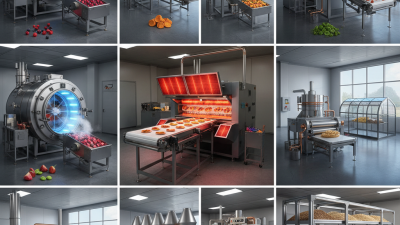
There are various drying methods. Dehydrators are popular for their efficiency. Sun drying is traditional but inconsistent. Freeze-drying retains maximum nutrients. Interestingly, studies indicate that properly dried foods can retain over 90% of their vitamins. However, achieving uniform drying can be tricky. Uneven moisture can lead to spoilage.
The benefits of food drying include reduced waste and enhanced portability. According to a USDA report, dehydrated fruits and vegetables can last up to a year. Plus, they make great snacks. But, drying can alter texture and taste, sometimes leading to unexpected results. Experimentation is key.
Types of Food Dryers: Home vs. Commercial Equipment
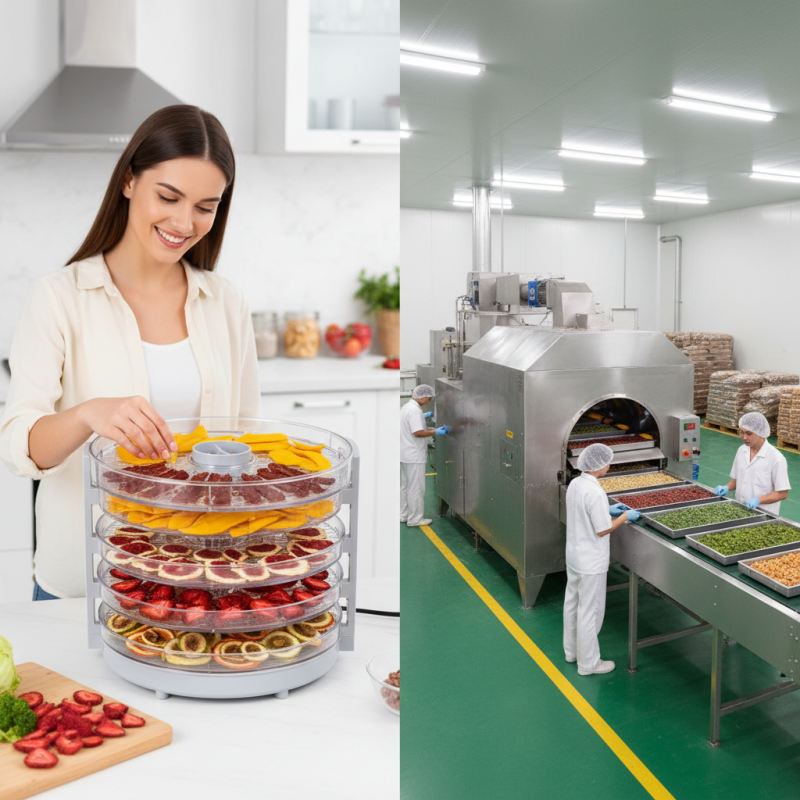
When considering food dryers, it's essential to distinguish between home and commercial equipment.
Home food dryers are typically smaller and simpler. They often have basic temperature controls and drying times. These machines are perfect for making snacks like dried fruits and jerky. They are user-friendly and require minimal setup. However, some models may not provide uniform drying. This can lead to uneven texture or flavor.
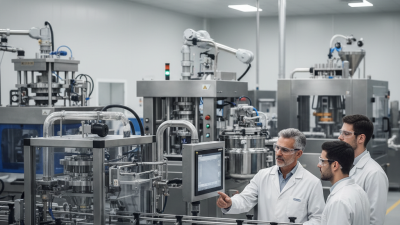
On the other hand, commercial food dryers are built for larger quantities and more demanding tasks.
They often come with advanced features like programmable settings and digital controls. These machines can handle bulk drying, making them ideal for restaurants or farms. Yet, they can be complex and may require training to operate effectively. Pricing for commercial units can be a significant investment. Users should compare features and read reviews to make informed choices.
While both types serve different needs, the choice depends on the intended use. Home users may find joy in small batches. Commercial users need consistency and reliability. Reflecting on personal needs can guide the decision-making process.
Key Features to Consider in Food Drying Machines
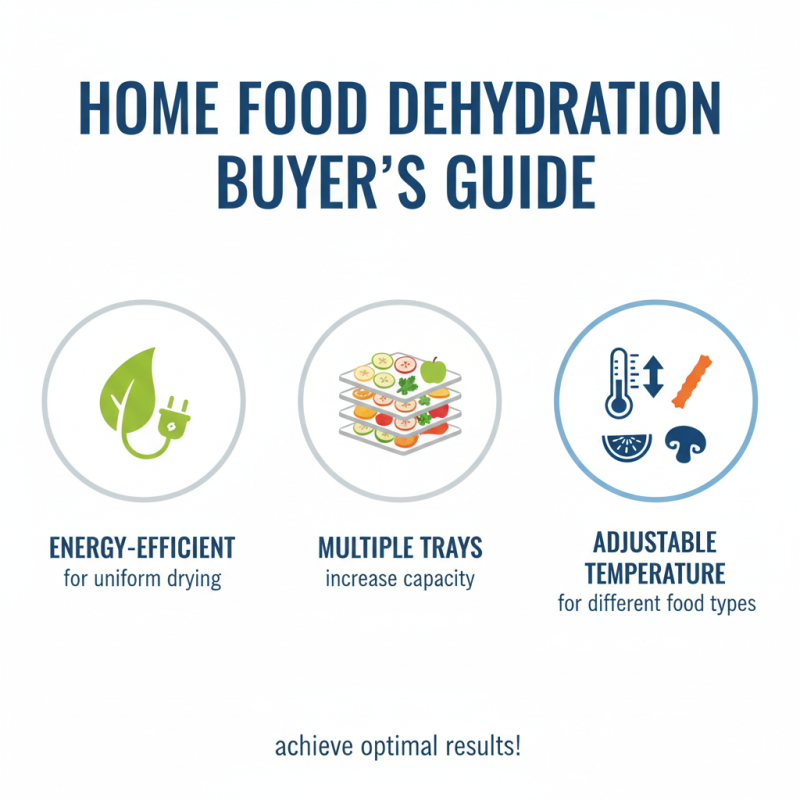
When selecting food drying machines, several key features are essential to consider.
Temperature control is crucial. Precise adjustments help achieve optimal drying.
An inaccurate setting can ruin your food. Look for models with digital displays for better accuracy.
Airflow quality matters too. Machines with efficient airflow promote even drying. This prevents some areas from over-drying while others remain moist. A well-designed fan system is vital for consistent results.
Tip: Always check the drying capacity. A larger capacity can save time if you dry in bulk. However, smaller units can be easier to store. Balance your needs carefully.
Another aspect to consider is user-friendliness. Simple controls can make the process less daunting. Complicated settings may lead to errors. Reflect on your level of experience with food drying. Choose a machine that matches your skill, ensuring a rewarding experience.
Best Practices for Efficient Food Drying Techniques
Efficient food drying techniques can enhance the flavor and longevity of your produce. Start by selecting the right ingredients. Fresh, ripe fruits and vegetables yield the best results. Prepare them by washing and slicing. Uniform pieces ensure even drying, avoiding burnt edges and underdone centers.
Temperature control is critical. Most foods dry best between 125°F to 145°F. Higher temperatures may cause nutrients to be lost. Use a good thermometer to monitor conditions inside the drying space. Remember, air circulation is vital. It helps in removing moisture more effectively.
Storage is another crucial aspect. Once dried, keep food in airtight containers. Light can deteriorate quality, so store in a dark place. On the downside, it’s easy to underestimate drying times. Regular checks are essential. The last thing you want is overly crunchy snacks or chewy fruits. Stay patient, and you’ll learn with practice.