China Best Poultry Processing Equipment Manufacturers?

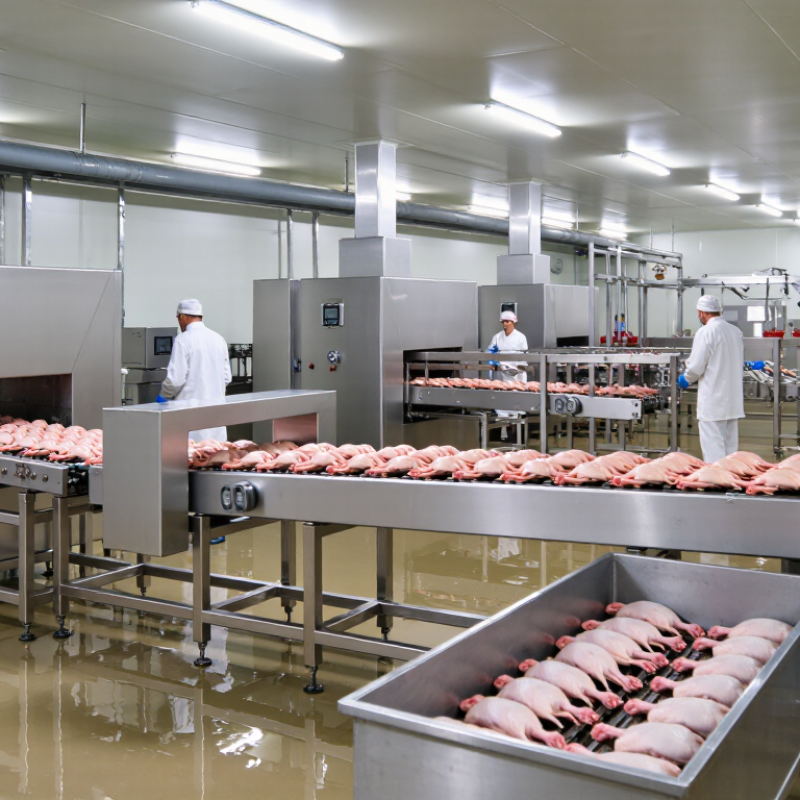
Choosing the best China poultry processing equipment manufacturers requires more than comparing prices or polished product photographs. A reliable evaluation examines engineering depth, hygiene design, production consistency, and long-term service. Stainless steel frames should resist corrosion. Welds must be smooth and easy to clean. Conveyors should maintain steady movement without damaging carcasses. These details become visible during real plant operation, especially when floors are wet and production runs continuously.

Animal welfare and food safety must remain central. Dr. Temple Grandin, a leading animal-handling specialist, stated, “The way animals are handled can affect meat quality.” Her observation connects equipment performance with practical results. A dependable poultry processing equipment supplier should support humane handling, controlled temperatures, cleanable surfaces, and documented quality procedures. Buyers should also review installation records, spare-parts availability, technician response times, and verified customer references. Factory visits can reveal more than catalog promises.

Still, naming one manufacturer as universally “best” would be careless. A small processor may need flexible equipment, while a large plant may prioritize automation and high throughput. Certification claims deserve independent checking. A beautiful demonstration line can hide maintenance problems. That is worth remembering. This guide compares Chinese manufacturers through measurable factors, including processing capacity, customization, sanitation, safety controls, export experience, and after-sales support. The goal is not to promote the loudest brand. It is to identify a practical partner that performs reliably when schedules are tight, workers are busy, and every cleaning cycle matters.
China Best Poultry Processing Equipment Manufacturers?

Definition and Scope of Poultry Processing Equipment Manufacturers

China Best Poultry Processing Equipment Manufacturers?

Poultry processing equipment manufacturers design, fabricate, assemble, and test machinery used across poultry production. Their scope may begin with bird receiving and controlled handling. It can extend to scalding, defeathering, evisceration, chilling, cutting, weighing, and packaging. Some manufacturers also produce washing systems, conveyors, refrigeration units, and wastewater equipment.

A reliable manufacturer should understand how equipment performs in a wet, cold, and demanding factory. Stainless steel surfaces need smooth welds and easy access for cleaning. Conveyor speeds must match labor, product size, and daily capacity. Temperature sensors, emergency stops, guarding, and clear maintenance points also matter. Details matter.

Professional evaluation should include technical drawings, material specifications, production records, factory testing, installation guidance, and spare-part support. Experienced manufacturers may adjust layouts for limited floor space or different processing targets. They should explain cleaning procedures and expected maintenance intervals without hiding operating costs. Conditions vary.

However, no manufacturer fits every facility. A high-capacity line may waste energy in a small workshop. An automated system may also require stronger technical staff than expected. Buyers should question performance claims and request practical test data. Visiting a working installation can reveal noise, cleaning difficulty, and downtime risks that brochures often miss. That gap matters.
Key Types of Poultry Processing Equipment Made in China

China Best Poultry Processing Equipment Manufacturers?

Key Types of Poultry Processing Equipment Made in China

China-made poultry processing lines usually combine several machines into one continuous workflow. Common equipment includes humane stunning systems, scalding tanks, defeathering machines, evisceration units, carcass washers, chillers, cutting tables, weighing systems, and packing machines. Some suppliers also build offal handling, feather collection, and wastewater treatment equipment. The OECD-FAO Agricultural Outlook 2024–2033 projects global poultry meat production to approach 159 million tonnes by 2033. That growth increases demand for equipment that improves yield, hygiene, and labor efficiency.

Scalders often use adjustable temperatures near 50–60°C, depending on bird size and processing speed. Chillers must reduce carcass temperature quickly, while stainless steel surfaces simplify cleaning. Automatic portioning can reduce weight variation, but calibration remains critical. Small errors become expensive at high volume. In practical plant experience, the weak point is often not the machine itself. Poor layout, unstable water pressure, or weak operator training can reduce performance. FAO food outlook reports continue to highlight disease, feed costs, and cold-chain reliability as major poultry risks. Buyers should therefore check throughput data, sanitation design, spare-part access, and actual test videos before choosing a Chinese manufacturer. Fancy automation is not always the best answer.

How to Evaluate Chinese Poultry Equipment Manufacturers

Evaluating Chinese poultry equipment manufacturers requires more than comparing quotations. FAO’s Food Outlook 2024 places global poultry meat production near 146 million tonnes. The OECD-FAO Agricultural Outlook 2024–2033 expects poultry to provide about 43% of additional meat production. Demand is rising, but equipment quality still varies widely.

Request verifiable factory records, not only product brochures. Check stainless-steel grades, weld quality, drainage angles, access panels, and cleaning time. Ask for documented throughput under conditions similar to yours. A line rated at 6,000 birds per hour may perform differently with heavier birds or frequent product changes.

Review electrical drawings, water consumption, air pressure, noise levels, and spare-parts availability. ISO 22000-based food safety controls are useful, but certification alone does not prove hygienic machine design. Factory acceptance testing should include speed, temperature control, emergency stops, and sanitation checks.

Tips: Visit the production site, inspect a running line, and speak with two existing users. Request a detailed total-cost estimate covering installation, training, maintenance, and downtime. Keep questions written and measurable. Personally, I would also test how quickly the supplier admits a design limitation. That answer can be more valuable than a perfect presentation. No evaluation is flawless; local service capacity is often underestimated.

Leading Manufacturing Regions and Industry Capabilities

China Best Poultry Processing Equipment Manufacturers?

Leading Manufacturing Regions and Industry Capabilities

China’s poultry equipment strength is concentrated in several manufacturing regions. Shandong supports large processing lines, stainless-steel fabrication, and cold-chain integration. Jiangsu and Zhejiang offer strong automation, sensors, and conveyor engineering. Guangdong adds practical experience with cooked poultry and export-oriented facilities. Henan and Liaoning remain important for processing machinery, spare parts, and regional poultry supply chains.

Regional capability matters more than factory size. The OECD-FAO Agricultural Outlook 2024-2033 identifies poultry as a major driver of global meat production growth. The USDA Foreign Agricultural Service’s 2024 China poultry report places national production near 15 million metric tons. This scale creates demand for defeathering systems, portioning machines, chilling tunnels, weighing units, and wastewater controls. Reliable manufacturers usually provide test runs, operator training, and documented food-contact materials. Small details matter. A poorly positioned drain can slow an entire shift.

Automation is not automatically better. Some plants still need flexible lines because bird sizes, product formats, and labor skills vary. Published capacity figures can also be difficult to compare. They may describe theoretical output rather than stable daily performance. Buyers should inspect factory acceptance records, sanitation access, energy use, and local service response. A quiet machine room looks impressive, but measurable uptime matters more. That distinction deserves closer attention.

Purchasing, Compliance, Installation, and After-Sales Support

China Best Poultry Processing Equipment Manufacturers?

Choosing a capable poultry processing equipment manufacturer requires more than comparing prices. Request a complete quotation, including conveyors, chilling systems, installation, training, and spare parts. Ask for production records from facilities with similar capacity. A factory visit can reveal workmanship that photos hide. Check weld quality, stainless-steel grades, food-contact surfaces, and cleaning access. The cheapest offer may create expensive delays.

Compliance must be checked before payment. Confirm electrical ratings, guarding, emergency stops, sanitation design, and documentation for your destination market. Your local inspector may require different certificates or testing reports. Ask the manufacturer to provide drawings, utility requirements, risk assessments, and a clear acceptance standard. Keep every specification in the contract. Verbal promises are difficult to enforce.

Installation should begin with a prepared floor plan, drainage points, water pressure, ventilation, and stable power. Leave service space around pumps and control cabinets. During commissioning, test output, product temperatures, water use, noise, and operator safety. Do not accept training that lasts only one afternoon. It sounds efficient, but it rarely builds confidence. After-sales support should include response times, remote troubleshooting, maintenance schedules, and stocked wear parts. A written warranty is essential, yet it cannot replace skilled operators. One detail is often missed: assign a local person to record faults, cleaning results, and replaced components. This simple log helps diagnose repeated failures and exposes unrealistic capacity claims. Even experienced buyers should review the plan again; small layout assumptions can become costly production problems.