Choosing the 2026 top food processing equipment suppliers requires more than comparing glossy catalogs. Buyers must examine hygiene design, automation capability, energy use, service coverage, and verified production results. A polished brochure proves little.
Grand View Research valued the global food processing equipment market at approximately USD 52 billion in 2023. Its report forecasts continued growth through 2030, supported by automation, packaged-food demand, and stricter safety expectations. PMMI’s industry research also highlights rising investment in connected machinery, robotics, and data-driven maintenance. These figures suggest opportunity, but they do not guarantee supplier quality. Market growth can hide weak after-sales support.
Food safety adds urgency. The World Health Organization estimates that contaminated food causes about 600 million illnesses and 420,000 deaths each year. Equipment choices influence cleaning time, contamination risks, traceability, and operator safety. As former FDA Deputy Commissioner Frank Yiannas has said, “Food safety is not a competitive advantage. It is a basic requirement.”
This guide evaluates leading suppliers through a practical lens. It considers processing accuracy, cleanability, spare-parts access, validation support, and total ownership cost. It also examines real factory conditions, from stainless-steel transfer lines to sensors exposed to daily washdowns. Food processing food operations rarely have unlimited budgets or perfect data. That matters.
Some rankings may change by region, product category, and plant size. A supplier suited to frozen vegetables may disappoint a dairy processor. Therefore, this overview is a starting point, not a final purchasing decision. Readers should verify certifications, test equipment with their own ingredients, and request measurable customer references before signing contracts.
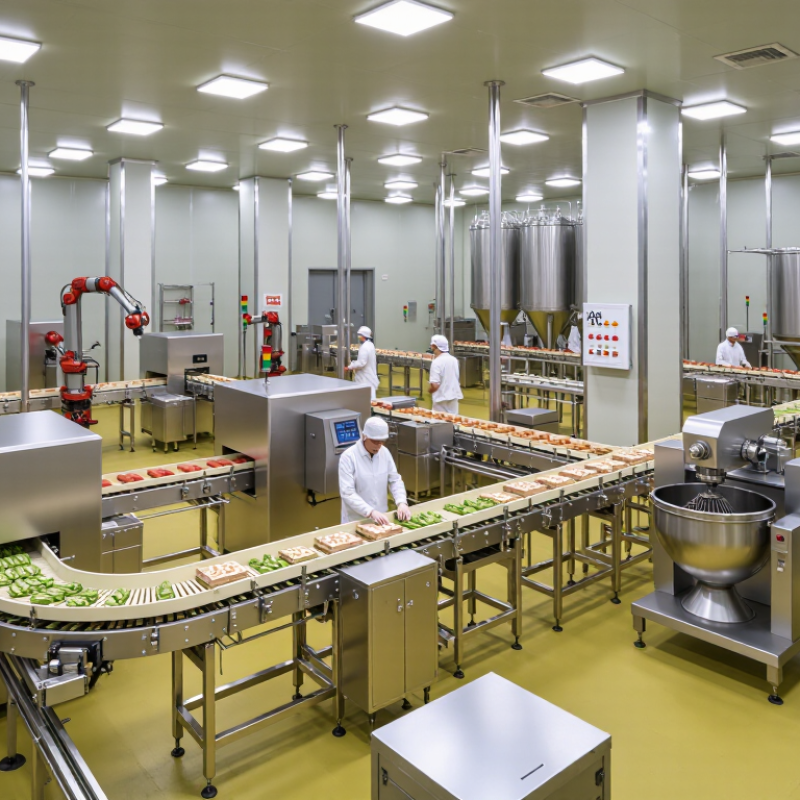
What defines a top food processing equipment supplier in 2026 is not a polished catalog. It is the ability to make safe, measurable, and repeatable production possible. Experienced suppliers study the product, process, floor space, utilities, and operator routines. They examine washdown zones, drainage, allergen separation, and cleaning time before recommending machinery. Small details matter. A poorly placed valve can slow every shift.
Technical authority appears in hygienic design, material selection, automation, and documented testing. Equipment should provide accessible surfaces, controlled temperatures, consistent dosing, and reliable data records. A capable supplier explains why a specification fits, not merely what it costs. Factory acceptance tests, installation support, and performance checks should use agreed targets. Operators need practical training, clear manuals, and safe maintenance procedures. Compliance claims must be verifiable through current certificates and traceable documentation.
Reliability is also measured after delivery. Spare-parts planning, response times, remote diagnostics, and local service capacity deserve written commitments. I have seen impressive machines underperform because commissioning was rushed or staff feedback was ignored. The lesson is uncomfortable. No supplier gets every decision right. Strong teams admit limits, document changes, and improve designs after real production data appears. Buyers should request references from similar lines, inspect maintenance records, and compare total operating cost against purchase price. During a site visit, they should watch how technicians clean, adjust, and explain the equipment.
2026 Top Food Processing Equipment Suppliers?
Leading Global Food Processing Equipment Suppliers for 2026
Leading global food processing equipment suppliers are being judged by measurable performance, not polished brochures. Buyers now examine sanitation, uptime, energy use, traceability, and after-sales support. The FAO’s State of Food and Agriculture report estimates that 14% of food is lost between harvest and wholesale. Better sorting, cooling, drying, and packaging systems can reduce avoidable losses. Yet equipment alone cannot fix weak production planning.
UNEP’s Food Waste Index Report 2024 estimates that 1.05 billion tonnes of food were wasted in 2022. This figure strengthens the case for accurate dosing, gentle conveying, and reliable temperature control. The best suppliers should provide documented factory testing, hygienic design evidence, spare-parts planning, and operator training. I would not trust a glossy brochure alone. Site references matter more.
Tips: Compare total ownership costs over ten years. Request energy data from similar installations. Test cleaning times with your own product. Check local service coverage before signing. A supplier may offer impressive automation, but complex controls can become a liability without trained technicians. This is an uncomfortable point. More technology is not always better. Procurement teams should also review changeover minutes, water consumption, reject rates, and product damage under real operating conditions.
| Equipment Segment | Primary Processing Function | Typical Food Applications | Indicative Capacity Range | Common Hygienic Design Features | Frequently Specified Standards or Frameworks | Key 2026 Purchasing Criteria |
|---|---|---|---|---|---|---|
| Raw Material Handling and Conveying | Moves, feeds, elevates, and distributes ingredients or finished products between process stages. | Grains, flour, sugar, bakery products, vegetables, snacks, meat, and packaged foods. | Approximately 0.5–100 tonnes per hour, depending on product density and conveyor configuration. | Open-frame construction, tool-free access, cleanable belts, controlled transfer points, and reduced product retention. | EHEDG principlesHACCP programsFood-contact material requirements | Gentle product handling, dust control, modular expansion, washdown compatibility, and energy-efficient drives. |
| Mixing, Blending, and Homogenization | Combines ingredients and creates consistent texture, concentration, or particle distribution. | Bakery dough, sauces, beverages, dairy products, confectionery, prepared meals, and powdered mixes. | Batch sizes commonly range from 50 kg to 10,000 kg; liquid systems may process roughly 0.5–50 m³ per hour. | Polished product-contact surfaces, hygienic agitator seals, drainable vessels, and validated cleaning access. | 3-A Sanitary principlesEHEDG principlesGMP | Mixing uniformity, shear control, recipe repeatability, short changeover time, and digital batch monitoring. |
| Thermal Processing and Pasteurization | Uses controlled heat treatment to improve food safety, shelf life, or product stability. | Milk, juices, liquid eggs, sauces, soups, beer, plant-based beverages, and ready-to-eat foods. | Liquid systems commonly operate from about 1–50 tonnes per hour; actual capacity depends on temperature profile and product viscosity. | Continuous monitoring, sanitary heat exchangers, automated diversion systems, drainable piping, and temperature data logging. | HACCP validationISO 22000 systemsApplicable local food-safety regulations | Heat recovery, precise residence-time control, low product loss, validated safety performance, and utility efficiency. |
| UHT and Aseptic Processing | Applies ultra-high-temperature treatment and hygienic filling to produce shelf-stable products. | Milk, cream, nutritional beverages, plant-based drinks, liquid desserts, and formulated beverages. | Common commercial systems process approximately 1–30 tonnes per hour, depending on formulation and packaging format. | Fully enclosed product circuits, sterile barriers, automated sterilization sequences, aseptic valves, and validated clean-in-place cycles. | Aseptic process validationGMPISO 22000 systems | Commercial sterility, reliable aseptic operation, product quality retention, low water consumption, and remote diagnostics. |
| Filling and Closing Systems | Precisely dispenses liquid, viscous, particulate, or powdered products into containers and applies closures. | Beverages, dairy products, sauces, oils, powders, canned foods, baby food, and nutritional products. | Roughly 30–1,200 containers per minute, depending on container type, fill volume, and line configuration. | Enclosed filling zones, sanitary nozzles, reduced splash, automated product recovery, and quick-change components. | Food-contact complianceGMPHACCP programs | Fill accuracy, container flexibility, reduced giveaway, line availability, format-change speed, and inspection integration. |
| Form-Fill-Seal and Packaging Lines | Forms packaging material, fills products, seals packs, and prepares products for distribution. | Snacks, frozen foods, fresh produce, bakery products, meat, confectionery, and dry ingredients. | Approximately 20–300 packs per minute, varying by package size, product characteristics, and sealing method. | Washdown-ready frames, accessible sealing areas, controlled atmosphere options, hygienic guarding, and reject handling. | Packaging-material complianceGMPHACCP programs | Material efficiency, seal integrity, recyclable-pack compatibility, product protection, automation level, and minimal downtime. |
| Industrial Freezing and Chilling | Rapidly reduces product temperature to preserve safety, texture, quality, and shelf life. | Vegetables, fruits, seafood, meat, poultry, ice cream, bakery products, and prepared meals. | Approximately 0.5–30 tonnes per hour, depending on product thickness, inlet temperature, and target temperature. | Easy-to-clean evaporator areas, stainless-steel construction, controlled airflow, hygienic belt design, and condensate management. | HACCP programsCold-chain controlsApplicable refrigeration regulations | Freezing uniformity, refrigerant efficiency, footprint, defrost management, product yield, and cold-chain data recording. |
| Drying, Dehydration, and Evaporation | Removes moisture or concentrates food materials to improve stability, transport efficiency, or formulation consistency. | Milk powder, coffee, fruit ingredients, starches, spices, grains, proteins, and liquid concentrates. | Capacity is highly product-dependent; evaporation systems may handle roughly 1–50 tonnes per hour of feed. | Sealed product paths, controlled powder recovery, cleanable air systems, explosion-risk controls where applicable, and low-retention surfaces. | GMPHACCP programsATEX or equivalent risk controls where applicable | Moisture uniformity, heat recovery, powder quality, energy consumption, fouling control, and safe dust management. |
| Meat, Poultry, and Seafood Processing | Performs cutting, portioning, deboning, grinding, emulsifying, tumbling, marinating, and forming operations. | Fresh meat, poultry, seafood, sausages, burgers, deli products, and ready-to-cook foods. | Approximately 0.5–20 tonnes per hour, depending on the specific operation and product format. | High-grade stainless steel, rounded frames, hygienic welds, tool-free dismantling, water-resistant components, and controlled splash zones. | HACCP programsGMPHygienic equipment design guidance | Yield, cutting precision, microbial-risk reduction, operator safety, traceability, cleaning time, and labor efficiency. |
| Cleaning-in-Place and Sanitary Utilities | Automatically cleans and sanitizes tanks, pipelines, heat exchangers, fillers, and other closed process equipment. | Dairy, beverage, brewery, sauce, prepared-food, and pharmaceutical-food applications. | Common circulation rates range from approximately 1–100 m³ per hour, depending on circuit size and cleaning design. | Validated flow velocity, hygienic valve manifolds, conductivity monitoring, separated chemical circuits, and automated recipe control. | EHEDG principles3-A Sanitary principlesHACCP verification | Water and chemical reduction, cleaning validation, cycle repeatability, chemical recovery, drainability, and digital records. |
2026 Top Food Processing Equipment Suppliers?
Key Equipment Categories and Technologies Offered by Top Suppliers
Top suppliers now compete across complete processing lines, not isolated machines. Core categories include washing, cutting, grinding, mixing, thermal processing, freezing, filling, and hygienic conveying. Each category affects yield, labor, cleaning time, and product consistency.
Automation is moving from simple sensors toward connected production systems. Vision inspection can detect size, color, and surface defects at high speed. Robotic case packing reduces repetitive handling. Inline weighing and metal detection strengthen process control. The International Federation of Robotics reported continued growth in industrial robot adoption, although food processing still faces integration and sanitation challenges.
Thermal technologies deserve close attention. High-efficiency ovens, steam systems, heat exchangers, and refrigeration units can reduce energy use. The International Energy Agency identifies industrial efficiency as essential for lowering emissions. Meanwhile, the UNEP Food Waste Index Report 2024 estimated 1.05 billion tonnes of food waste in 2022. Better slicing accuracy, portion control, and cold-chain monitoring can limit avoidable losses.
Supplier evaluation should include factory trials, sanitation tests, spare-parts access, and operator training. Claims are not enough. A machine may perform well in a showroom but struggle with sticky dough or irregular vegetables. Small details matter, including tool-free access, drain design, and data compatibility. Total cost calculations should include water, energy, downtime, and cleaning labor. This process is slower, but more honest.
This category map summarizes widely used technologies offered across the food-processing equipment sector. Values represent the number of representative technologies listed for each equipment category, not company revenue, market share, or supplier ranking.
Comparing suppliers requires more than checking machine price. MarketsandMarkets estimates the food processing equipment market will grow at roughly 5–6% annually through 2028. That growth increases supplier choices, but also increases buying risks. Ask for verified throughput, yield data, cleaning time, and energy consumption. Request a live factory acceptance test using your actual ingredients. Numbers matter.
Hygienic design should be examined closely. Inspect weld quality, drainability, seals, access points, and tool-free changeover. A machine may look impressive under bright showroom lights. Production floors are less forgiving. FAO reported that 13.2% of food was lost between harvest and retail in 2021. Better equipment cannot solve every loss, but accurate dosing, gentle handling, and stable temperatures can reduce avoidable waste. Check how the supplier measures this improvement.
Service capability deserves equal weight. Review response times, local technicians, spare-parts availability, software support, and operator training. PMMI industry research continues to identify labor shortages and automation as major investment drivers. Ask whether the interface helps inexperienced operators recover safely from faults. It should. A low purchase price can hide expensive downtime, difficult sanitation, or frequent manual adjustments. Total cost models are useful, though never perfect. Leave room for uncomfortable questions.
Hygienic design remains a practical priority. Procurement teams should inspect weld quality, drainage points, seals, and cleaning access before signing contracts. Equipment made with suitable food-contact materials must match local safety requirements. Suppliers should provide validation records, spare-parts plans, training, and clear service response times. A glossy demonstration can mislead.
The numbers are not always clean. Energy savings reported in a factory trial may change under heavier loads or shorter production runs. Buyers should request site testing, measurable acceptance criteria, and a total-cost model covering installation, labor, utilities, and downtime. Modular equipment is gaining attention because it supports product changes and future capacity. However, extra flexibility may increase control complexity. Procurement managers need honest discussions about integration risks, cybersecurity, and the skills available on the factory floor. A cheaper machine can become expensive when support is distant or documentation is incomplete.