How to Choose Food Processing Equipment for Your Business

Choosing food processing equipment is a production decision, not merely a purchasing exercise. The right machine must handle ingredients consistently, protect food safety, and fit the plant’s daily rhythm. A mixer may look impressive in a demonstration, yet fail when cleaning takes too long or operators cannot access critical parts. That gap matters.

PMMI’s 2024 State of the Industry report highlights labor availability, automation, and flexible production as continuing investment drivers for manufacturers. Meanwhile, the FAO estimates that 13.2% of food is lost between harvest and retail, according to The State of Food and Agriculture 2019. Better processing control cannot solve every loss, but accurate dosing, stable temperatures, and reliable conveying can reduce avoidable waste. Small improvements add up.

The equipment must suit the product.

This guide explains how to compare food processing equipment through practical, measurable criteria. Consider throughput, batch size, sanitation design, energy use, maintenance access, and future expansion. Ask suppliers for factory acceptance testing, documented performance data, and references from similar plants. A quoted capacity may reflect ideal conditions, not sticky dough, uneven vegetables, or frequent changeovers. That assumption deserves testing.

Safety and compliance remain central. Equipment should support hygienic design principles, traceability, and validated cleaning procedures. Review materials, seals, guards, sensors, and control systems with qualified engineers and food safety professionals. Total cost of ownership also matters. A cheaper machine can become expensive through downtime, spare-part delays, and excessive water consumption. Not every automated solution is worthwhile. Sometimes, a simpler machine performs better.
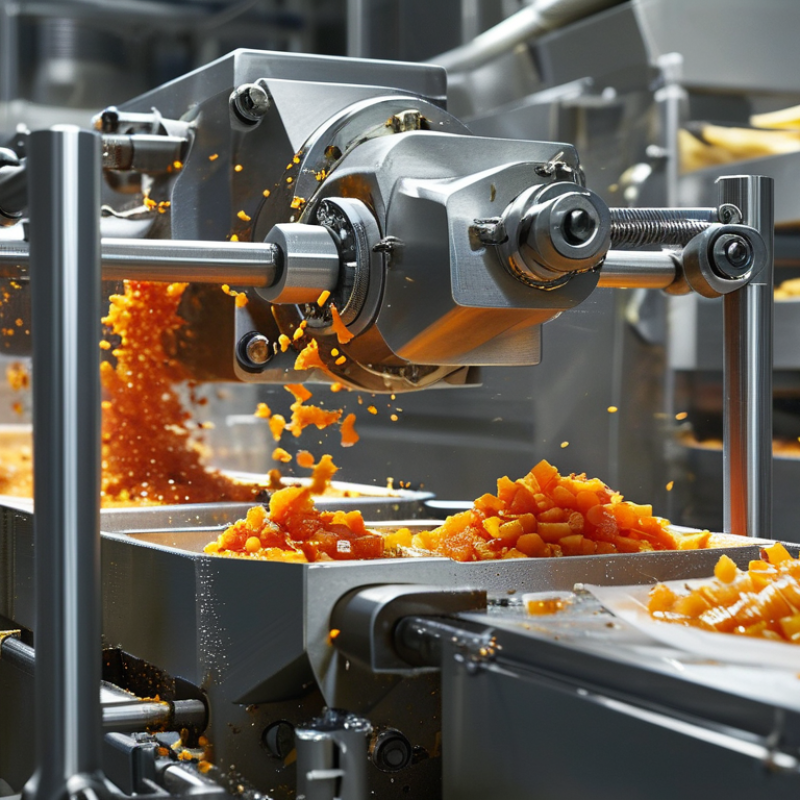
How to Choose Food Processing Equipment for Your Business

Define Your Food Processing Needs and Production Goals

How to Choose Food Processing Equipment for Your Business

Define Your Food Processing Needs and Production Goals

Start by describing the product, not the machine. Record its texture, moisture level, size, temperature, and handling sensitivity. A soft fruit requires different treatment from frozen vegetables or dense dough. Small details affect cutting, mixing, pumping, and cleaning requirements.

Set measurable production goals before requesting equipment proposals. Define hourly output, batch size, operating hours, labor capacity, and acceptable product loss. Include future demand, but avoid buying capacity you cannot use. Oversized equipment can increase energy costs, cleaning time, and maintenance complexity.

Walk through your real process on paper. Note where ingredients enter, where operators work, and where finished products leave. Check available floor space, drainage, electrical supply, ventilation, and water pressure. Sanitary design matters. Smooth surfaces, accessible contact areas, and simple disassembly support reliable cleaning practices.

Ask suppliers for test runs using your actual ingredients. Measure yield, processing time, temperature changes, and product consistency. Request clear documentation for materials, safety features, maintenance intervals, and operator training. Independent technical advice can reveal hidden installation costs. It is worth checking twice.

A common mistake is focusing only on purchase price. I have seen production plans fail because cleaning labor and downtime were ignored. Your first estimate may be incomplete. Review it with operators, maintenance staff, and food safety personnel before making a final decision.
Assess Material Compatibility, Capacity, and Processing Requirements

Choosing food processing equipment starts with the material, not the machine’s appearance. I once underestimated how strongly an acidic fruit puree could affect equipment surfaces. The trial revealed discoloration around a poorly selected seal. That mistake changed my evaluation process.

Match every wetted part with the product’s chemistry. Acidic, salty, fatty, and abrasive foods create different demands. Stainless steel may suit many products, but surface finish and alloy quality still matter. Check seals, gaskets, coatings, and transfer hoses separately. Ask for compatibility data, then test a real sample at operating temperature. Laboratory assumptions can miss practical problems.

Capacity must reflect your actual production rhythm. A machine processing 500 kilograms hourly may struggle during thick, cold batches. Measure viscosity, particle size, moisture, and temperature changes. Record the smallest and largest batch sizes. Include loading, unloading, cleaning, and changeover time. These tasks reduce effective output. My early capacity estimate ignored cleaning time, and the daily schedule became unrealistic. Leave some headroom instead of running equipment continuously at its limit.

Processing requirements also shape the equipment choice. Gentle mixing protects delicate pieces, while high shear may suit smooth emulsions. Confirm heating rates, cooling control, pressure limits, and residence time. Request performance records and clear maintenance instructions. Let operators review the design before purchase. Their practical objections often reveal awkward access points or difficult cleaning steps. A short on-site trial can expose more than a polished specification sheet.

Compare Equipment Types, Features, and Automation Levels

How to Choose Food Processing Equipment for Your Business

Equipment selection should begin with product behavior, not catalogue size. Liquids may need pumps, while sticky fillings require controlled scraping and gentle mixing. Cutting, grinding, cooking, cooling, and packaging each demand different contact surfaces and cleaning access.

FAO reports that about 14% of food is lost between harvest and wholesale, so accurate temperature control and reliable handling deserve serious attention.

Compare equipment by capacity, flexibility, sanitation, maintenance, and automation level. A manual mixer may suit seasonal production, but it can create uneven batches and operator fatigue. Semi-automatic systems often provide a practical middle ground. They can automate weighing, filling, or sealing while keeping skilled workers involved. Fully automated lines improve repeatability, yet they require stronger data systems, technical training, and careful changeover planning. More automation is not always better.

Look closely at the details. Can operators inspect a valve without removing half the line? Are sensors easy to calibrate? Does the equipment record temperature, speed, and batch timing? The Food Waste Index Report 2024 estimated 1.05 billion tonnes of food waste in 2022, making process control difficult to dismiss. The International Federation of Robotics recorded 542,000 industrial robot installations in 2023, showing automation is expanding across manufacturing. Still, I would not automate a poorly designed process. That mistake is expensive. Pilot testing with real ingredients, containers, cleaning routines, and peak workloads can reveal problems that brochures hide.

Evaluate Safety, Sanitation, Energy Use, and Maintenance

Choosing food processing equipment requires more than comparing capacity and price. Safety should guide the design from the start. Look for guarded moving parts, emergency stops, stable frames, and clear operating controls. Product-contact surfaces should be smooth, corrosion-resistant, and easy to inspect. Hidden seams can trap moisture and food residue. That creates cleaning problems.

Tips: Request cleaning instructions before purchase. Ask to see removable parts. Check whether one trained worker can safely complete the sanitation routine. Measure water, detergent, and rinse requirements during a trial. Record energy use under a realistic production load, not only the supplier’s best-case figure.

Energy efficiency matters, but the cheapest motor is not always the best choice. A properly sized system may reduce idle power and shorten processing time. Maintenance access also deserves close attention. Can technicians reach filters, seals, bearings, and electrical panels without dismantling half the machine? Keep spare parts lists and service records. My early equipment comparisons focused too heavily on output. That was a mistake. Downtime, difficult cleaning, and frequent adjustments can erase those gains. Choose equipment that supports documented inspections, consistent sanitation, and practical daily maintenance.

How to Choose Food Processing Equipment for Your Business - Evaluate Safety, Sanitation, Energy Use, and Maintenance

Equipment Type Typical Application Typical Capacity Key Safety Features Sanitation Considerations Indicative Energy Use Maintenance Requirements Overall Suitability
Food Conveyor Moving ingredients, packaged products, or containers between process stages. 0.5–10 tonnes/hour Emergency stops, guarded drives, belt tracking controls, and accessible isolation points. Prefer removable or clean-in-place belts, open-frame construction, sloped surfaces, and minimal product traps. Low
0.5–5 kW motor
Inspect belt tension, bearings, guards, and belt condition; lubricate only with food-grade lubricants where required. High
Batch Cooking Kettle Heating soups, sauces, fillings, jams, dairy mixtures, and prepared foods. 50–2,000 litres/batch Insulated surfaces, temperature controls, pressure protection where applicable, and guarded agitators. Use sanitary welds, drainable piping, smooth internal surfaces, and validated cleaning procedures for allergen control. Medium–High
15–150 kW thermal input
Check agitator seals, valves, temperature sensors, insulation, and heating surfaces; verify calibration regularly. High for wet products
Industrial Slicer or Dicer Cutting vegetables, fruits, meats, cheese, and other solid food products. 200–5,000 kg/hour Interlocked covers, blade guards, tool-free access where possible, and emergency stop controls. Select corrosion-resistant materials, removable product-contact parts, and designs that prevent residue accumulation. Low–Medium
2–15 kW
Inspect and sharpen or replace blades, check seals and bearings, and verify interlock operation before production. High with strong controls
Continuous Fryer Frying snacks, coated foods, potato products, and prepared foods at continuous throughput. 100–2,000 kg/hour Heat-resistant guarding, oil-level protection, fire controls, emergency shutoff, and ventilation. Requires frequent oil management, crumb removal, accessible drains, and thorough cleaning of conveyors and filtration areas. High
100–1,000 kW thermal input
Monitor oil quality, heating elements or burners, pumps, filters, exhaust systems, and temperature controls. Medium
Convection or Tunnel Oven Baking, roasting, drying, or heat treatment of bakery and prepared food products. 100–2,000 kg/hour Insulated doors, over-temperature protection, guarded access points, and appropriate exhaust controls. Use removable panels, accessible crumb collection points, cleanable belts, and controlled condensate drainage. High
100–1,500 kW thermal input
Inspect insulation, burners or heating elements, fans, belts, temperature sensors, and exhaust ducts. Medium–High
Packaging and Sealing Machine Filling, sealing, wrapping, or modified-atmosphere packaging of finished products. 20–200 packs/minute Guarded moving parts, interlocked access doors, seal-temperature controls, and emergency stops. Keep product-contact zones dry and accessible; avoid exposed lubricants and clean according to the packaging material requirements. Low–Medium
3–25 kW
Inspect sealing jaws, sensors, pneumatic components, film paths, heaters, and calibration of fill or weight systems. High
Clean-in-Place (CIP) System Automated cleaning of tanks, heat exchangers, pipelines, fillers, and other closed process equipment. 1–20 m³/hour circulation Chemical storage safeguards, temperature monitoring, pressure relief, clear labeling, and operator protection. Validate flow, temperature, chemical concentration, and contact time; ensure all circuits drain completely. Medium–High
5–100 kW electrical plus heat
Check pumps, spray devices, valves, chemical dosing, conductivity sensors, seals, and return-line flow. High for closed systems

Note: Capacity and energy figures are indicative industry ranges. Actual performance depends on product characteristics, process temperature, operating hours, equipment size, insulation, utilities, cleaning method, and production conditions. Confirm final values through a site-specific utility study and supplier documentation.

Select Equipment Based on Budget, Compliance, and Future Growth

A sensible equipment decision starts with cash flow, not catalog photos. Separate purchase price from installation, training, utilities, sanitation, and spare parts. The Packaging Machinery Manufacturers Institute’s 2023 industry report identified labor shortages and automation as major priorities. That finding matters for food processors. A cheaper filler can become expensive when two operators are needed every shift. Calculate cost per acceptable unit, not cost per machine. Leave a contingency; my own estimates are often too optimistic.

Compliance should shape the design before a quotation arrives. Select hygienic surfaces, tool-free access where practical, guarded moving parts, and documented cleanability. The FDA’s Food Safety Modernization Act emphasizes preventive controls, verification, and documented sanitation. The CDC estimates that 48 million Americans experience foodborne illness annually. Traceability and temperature records are operational safeguards, not paperwork. Ask suppliers for validation records, material declarations, and maintenance instructions. Never assume one certificate covers your entire line.

Plan for the next product, but avoid buying capacity that will sit idle. The FAO’s State of Food and Agriculture reports that 13.2% of food is lost before retail globally. Better dosing accuracy, gentle conveying, and temperature control can reduce waste at the source. Choose modular frames, adjustable change parts, and spare electrical capacity. Test a representative batch with sticky, fragile, and oversized products. The awkward test usually teaches more. Recheck payback under slower sales, higher energy prices, and one absent technician.

How to Choose Food Processing Equipment for Your Business

Select equipment by balancing upfront budget, food-safety compliance, and the ability to support future production growth. The comparison below uses a 1–5 planning scale, where 5 represents the strongest fit.

How to read the chart: Lower-cost equipment may offer a strong starting point, while automated systems generally provide better production scalability and process consistency. Compliance readiness should be assessed alongside cleanability, hygienic design, traceability, and validation requirements.