- Food processing equipment
Applications
Products
- Washing & drying systems
- Service
Menu
Menu
Choosing the right food processing pumps can influence product quality, sanitation, production speed, and operating costs. A pump moving milk behaves differently from one handling tomato paste or edible oil. Viscosity, temperature, flow rate, pressure, and particle size all matter. So does the product’s sensitivity to shear.
A practical selection begins with the process, not the pump catalogue. Describe the liquid clearly. Is it smooth, thick, acidic, hot, or filled with fruit pieces? A sanitary centrifugal pump may suit low-viscosity liquids, while a positive displacement pump often handles sauces, creams, and dense fillings more consistently. The pump should also support effective cleaning, including clean-in-place procedures where appropriate. Smooth surfaces, suitable seals, hygienic connections, and corrosion-resistant materials help reduce contamination risks.
Small details matter.
For example, a pump that meets the required flow rate may still damage a delicate emulsion. Excessive speed can create foam, heat, or unwanted shear. An undersized pump may run continuously and increase maintenance demands. Energy use deserves attention too. Efficient equipment can reduce long-term costs, but the cheapest purchase is not always the most reliable choice.
Experienced engineers should review product data, duty cycles, cleaning routines, and future capacity plans. Supplier documentation, traceable materials, and recognized hygienic design practices also support a dependable decision. Still, no selection is perfect on paper. Real production conditions may reveal unexpected pressure losses, seal wear, or seasonal viscosity changes. Testing, monitoring, and honest review remain essential when choosing food processing pumps for a safe and efficient business.
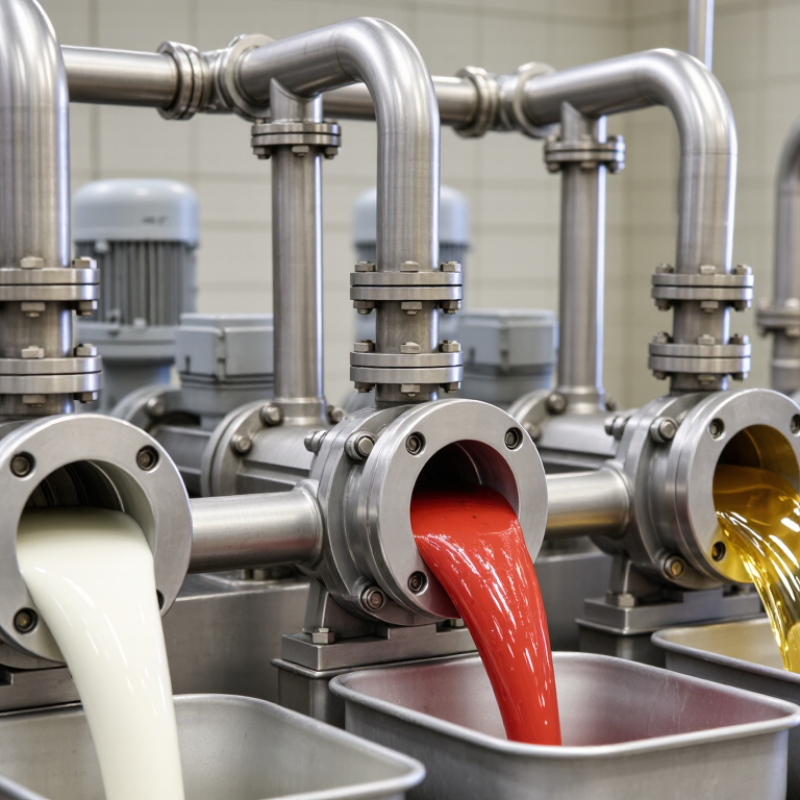
Choosing a food processing pump begins with defining the product, not browsing equipment catalogs. Record its viscosity, temperature, acidity, particle size, and sensitivity to shear. A thin beverage may need different handling from a thick sauce containing seeds. Small details matter.
Write down the required flow rate and discharge pressure for each production stage. Include pipe length, elevation changes, valves, filters, and transfer distance. Confirm whether the pump must handle hot cleaning cycles or frequent product changes. Hygienic construction, smooth internal surfaces, drainability, and easy inspection support safer operations. Select materials that resist the product and approved cleaning chemicals. A technically suitable pump can still fail if operators cannot clean it properly.
Tips: Measure the product at its real processing temperature. Viscosity can change sharply as it cools. Ask suppliers for performance data using a similar fluid, not only water. Check seal design, spare-part availability, noise levels, and maintenance access. I have seen pumps selected from ideal laboratory data struggle on a busy production floor. That gap deserves attention. Also, avoid oversizing. Excess capacity may increase energy use, product damage, and control problems. Test a representative sample when possible, and document every assumption before approving the final specification.
| Requirement | What to Define | Typical Food-Processing Considerations | Why It Matters for Pump Selection | Recommended Specification Record |
|---|---|---|---|---|
| Product Type | Identify the liquid or semi-liquid product to be pumped. | Water-like liquids, milk, sauces, syrups, oils, creams, fruit preparations, beverages, and products containing particles require different pump characteristics. | Viscosity, solids content, shear sensitivity, and cleaning requirements directly affect pump design and operating performance. | Product name, composition, viscosity, density, temperature, and solids content. |
| Required Flow Rate | Determine the target production flow and acceptable operating range. | Flow is commonly stated in litres per minute (L/min), cubic metres per hour (m³/h), or gallons per minute (GPM). | The pump must deliver the required capacity at the actual system pressure, not only at free discharge. | Normal flow, minimum flow, maximum flow, and required control method. |
| Total Head or Pressure | Calculate the pressure the pump must overcome. | Include elevation, pipe friction, valves, filters, heat exchangers, spray devices, and downstream equipment. | A pump with insufficient head will not achieve the required flow; excessive head may waste energy or damage the product. | Required discharge pressure, suction pressure, elevation change, and estimated system losses. |
| Product Viscosity | Record viscosity at the actual processing temperature. | Low-viscosity liquids generally suit centrifugal pumping, while thicker products often require positive-displacement pumping. | Viscosity affects capacity, efficiency, starting torque, pressure capability, and motor sizing. | Dynamic viscosity in mPa·s or cP at minimum, normal, and maximum temperatures. |
| Solids and Particle Size | Define the amount, size, shape, and fragility of suspended particles. | Examples include fruit pieces, vegetable particles, seeds, grains, and soft inclusions. | Clearance, impeller design, valve configuration, and pump speed must prevent clogging and unacceptable product damage. | Solids percentage, maximum particle size, particle hardness, and sensitivity to breakage. |
| Shear Sensitivity | Determine whether the product can tolerate agitation and high-speed pumping. | Emulsions, cultured products, creams, and products with delicate structures may be affected by excessive shear. | Lower-speed positive-displacement pumps or carefully selected centrifugal pumps may better preserve product quality. | Acceptable shear level, texture requirements, and maximum recommended pump speed. |
| Temperature Range | Define product, ambient, cleaning, and sterilization temperatures. | Processing may involve chilled liquids, hot products, hot-water cleaning, or steam-based sanitation. | Temperature influences viscosity, seal selection, material compatibility, thermal expansion, and cleaning capability. | Minimum and maximum operating temperatures plus cleaning and sterilization temperatures. |
| Hygienic Design | Specify the required sanitary construction and cleanability level. | Food-contact areas should use suitable corrosion-resistant materials and minimize dead legs, crevices, and product retention. | A hygienically designed pump supports food safety, reduces contamination risk, and simplifies inspection and cleaning. | Required sanitary standard, surface-finish requirement, drainability, and connection type. |
| Cleaning Method | Define whether the pump will be cleaned in place or cleaned manually. | CIP systems commonly circulate cleaning solutions through the process equipment without dismantling it. | The pump must tolerate the cleaning chemicals, flow velocity, temperature, and pressure used during the cleaning cycle. | CIP or manual cleaning, chemical concentration, cleaning temperature, duration, and flow rate. |
| Material Compatibility | Match wetted materials and elastomers with the product and cleaning agents. | Common food-processing construction uses corrosion-resistant stainless steel, with seals selected for temperature and chemical exposure. | Material incompatibility can cause corrosion, seal failure, contamination, or shortened equipment life. | Wetted metal, gasket material, mechanical-seal material, product pH, and cleaning chemicals. |
| Suction Conditions | Evaluate inlet pressure, suction lift, pipe layout, and available NPSH. | Long suction lines, restrictive fittings, hot liquids, and low tank levels can reduce the pressure available at the pump inlet. | Insufficient suction conditions may cause cavitation, vibration, noise, reduced capacity, and premature wear. | Tank level range, inlet pressure, suction-pipe size and length, liquid temperature, and NPSH available. |
| Pump Technology | Select the pump principle that fits the product and system. | Centrifugal pumps are commonly used for low-viscosity fluids and high flow; positive-displacement pumps suit higher viscosity or controlled dosing. | The correct technology improves product handling, pressure stability, energy efficiency, and maintenance performance. | Preferred pump type, operating speed, pressure capability, capacity range, and control method. |
| Flow Control | Define how the process will regulate flow. | Options may include a variable-frequency drive, control valve, bypass system, or batch-based start-stop control. | Appropriate control avoids unnecessary recirculation, improves batch consistency, and reduces energy consumption. | Required turndown ratio, control accuracy, response time, and automation interface. |
| Operating Schedule | Estimate duty cycle, annual operating hours, and number of starts. | Continuous production, intermittent transfer, batching, and frequent start-stop operation place different demands on the pump. | Duty information affects motor selection, bearing life, seal life, thermal loading, and preventive-maintenance intervals. | Hours per day, days per year, duty cycle, starts per hour, and standby requirements. |
| Installation Environment | Assess available space and site conditions. | Consider washdown exposure, humidity, ambient temperature, drainage, accessibility, and electrical area classification. | Environmental conditions influence enclosure protection, mounting, corrosion resistance, safety, and service access. | Indoor or outdoor location, washdown frequency, ambient range, floor space, and electrical supply. |
| Maintenance and Lifecycle Cost | Define service expectations and total cost objectives. | Review seal replacement, spare parts, inspection access, lubrication needs, energy use, and planned downtime. | The lowest purchase price may not provide the lowest cost over the pump's operating life. | Maintenance interval, spare-parts strategy, expected service life, energy target, and downtime cost. |