What Are the Top Meat Equipment Types in 2026?
What will define the most useful meat equipment in 2026: speed, precision, hygiene, or flexibility? Processors rarely need just one machine. They need connected tools that move meat from cutting and grinding to portioning, packaging, and cleaning. A grinder’s plate, a mixer’s paddles, and a slicer’s guarded blade each affect product consistency and daily workflow. Small details matter.
Demand adds context. The OECD-FAO Agricultural Outlook 2024–2033 projects global meat consumption to be about 12% higher by 2033 than during its 2021–2023 base period. That projection describes food demand, not machinery sales. Still, it helps explain why processors assess equipment that can handle changing volumes without sacrificing control. In this guide, we look at core meat equipment types, including grinders, mixers, bandsaws, slicers, tenderizers, forming machines, tumblers, conveyors, and packaging systems. We also consider the practical questions behind a purchase: product range, throughput, cleanability, operator safety, and available floor space. A high-capacity machine may look impressive, yet it can be a poor fit for a small plant. That is worth questioning. Specifications alone do not tell the whole story; maintenance access and changeover time matter on a real production floor. The best choice depends on the product, the process, and the people operating it.
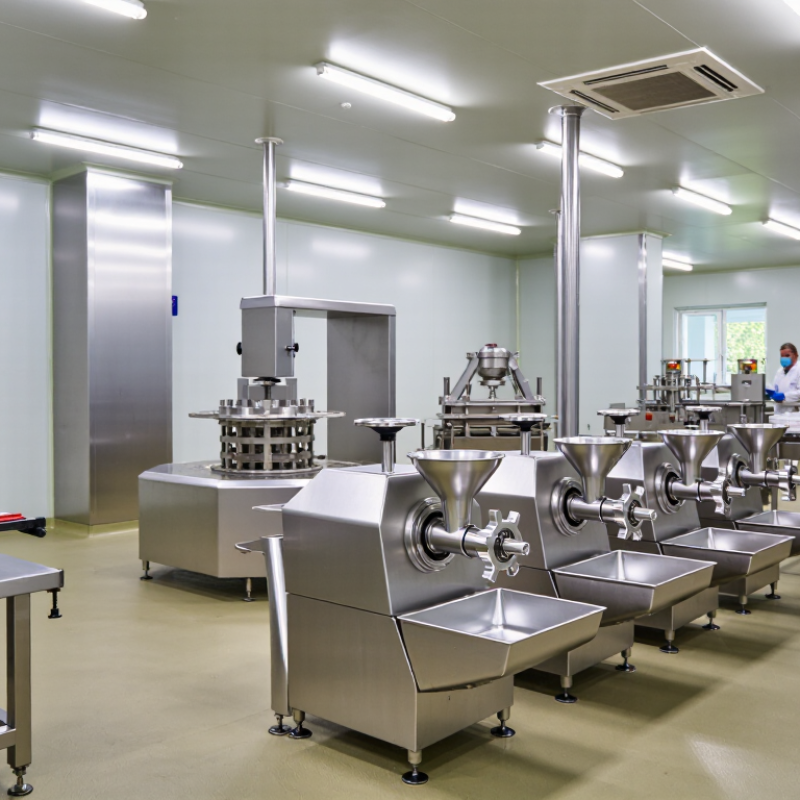
How Meat Processing Equipment Is Classified by Function
Meat processing equipment is best classified by the job it performs, not just by the product it handles. Receiving and weighing systems control incoming loads; saws, slicers, and deboning tools divide carcasses into usable portions. Grinders and mixers then create consistent particle size and blend. Small steps matter. A dull blade can leave uneven cuts and increase trimming work.
Forming machines shape ground mixtures, while tumblers and injectors distribute seasonings or brines. Cookers, smokehouses, chillers, and freezers manage temperature and texture. Packaging and inspection equipment protect the finished product and help operators identify defects. The OECD-FAO Agricultural Outlook 2024–2033 projects global meat production to grow 12% by 2033, compared with the 2021–2023 base period. That outlook points to continued production needs, but it does not mean every plant needs the same machinery.
A useful equipment review follows the product from raw material to packed case. Check throughput, changeover time, sanitation access, and how easily operators can spot residue around joints or belts. The neat category map has limits. One machine may perform several tasks, and poorly planned handoffs can slow an otherwise fast line. Temperature control and cleanability deserve as much attention as rated speed.
Primary Cutting Equipment for Breaking Down Carcasses
Primary cutting turns a carcass into manageable sides, quarters, and primal cuts. In 2026, the core equipment remains practical: carcass splitters, band saws, brisket and rib saws, and powered or manual breaking knives. USDA’s 2023 Livestock Slaughter report recorded about 32 million cattle and 127 million hogs processed commercially in the United States. That scale makes consistent cutting, safe handling, and reliable equipment upkeep essential. Yet throughput alone is a poor measure of performance. A saw that cuts quickly can still create uneven portions or costly trim if setup and operator technique are weak.
A carcass splitter handles the backbone; a band saw then divides sides or larger sections into repeatable cuts. Breaking knives and trimming tools refine the work around joints, fat seams, and connective tissue. The exact setup depends on species, carcass size, line speed, and the plant’s product mix. USDA’s Food Safety and Inspection Service emphasizes hygienic handling and sanitation in meat-processing environments, so equipment design should also support accessible cleaning. Small details matter. Guards, blade tension, ergonomic grips, and clear cleaning procedures deserve attention—not just motor power.
Tips: Match blade length and tooth pitch to the cuts your line actually makes. Keep a spare blade ready, and check saw alignment before a shift. Record downtime and trim loss; they may reveal a problem that purchase specifications missed. A less obvious truth: highly automated equipment can make a poor workflow faster, not better.
Grinding, Mixing, and Forming Equipment for Product Preparation
Grinding, mixing, and forming lines determine texture, yield, and how steadily a plant can work. The FAO’s June 2024 Food Outlook forecast global meat production at about 366 million tonnes in 2024. That scale makes consistent product preparation more than a speed issue. A grinder should produce an even particle size without excessive heat; operators can check the discharge temperature and inspect the cut surface. Small checks matter.
Mixers need enough capacity for the batch, not just the shift’s theoretical peak. Poorly distributed seasoning or uneven fat can leave visible streaks in a tray. Forming equipment then needs to hold portion weight and shape across repeated cycles. OECD-FAO Agricultural Outlook 2024–2033 projects global meat consumption to grow by 12% over the decade, largely with population growth. For buyers, that supports planning for flexible throughput, but not simply choosing the largest machine. Still, spreadsheets miss sticky batches, awkward changeovers, and cleaning time. A line that looks efficient on paper may need more adjustment on a wet Monday morning.
Cooking, Smoking, and Chilling Equipment for Thermal Processing
What Are the Top Meat Equipment Types in 2026?
Cooking, smoking, and chilling equipment each control a different part of thermal processing. Cooking systems use ovens, kettles, or continuous cookers to bring products to specified time-and-temperature targets. Consistent heat matters. Uneven loading can leave cold spots, so operators should verify product temperatures with calibrated probes rather than relying only on chamber displays. Smoking equipment adds controlled heat, airflow, and smoke exposure. The right setup depends on product size, desired flavor, and production volume. Smoke density is only one factor; humidity and airflow also affect surface color and drying.
Chilling equipment, including blast chillers and refrigerated rooms, removes heat after cooking. Fast, even cooling helps protect product quality and supports safe handling. Yet a crowded rack can slow airflow, even when the refrigeration system is correctly sized. That is an easy detail to miss. Processing teams should monitor product temperature at representative locations, keep clear records, and follow validated procedures for their products and equipment.
Tips: Leave space between racks, check probe calibration on a routine schedule, and compare readings from different chamber zones. Clean smoke ducts and inspect door seals, too. Small checks matter. If temperatures vary more than expected, review loading patterns and airflow before changing process settings. A perfect-looking display does not guarantee every product received the same treatment.
Top Meat Equipment Types for Thermal Processing
The bars show representative equipment or process temperature ranges in °C, not product core temperatures or universal operating standards. Actual settings depend on the product, process, and applicable food-safety requirements.
Packaging and Inspection Equipment for Safe Distribution
For safe meat distribution, packaging and inspection equipment must work as one controlled line.
Vacuum sealers and thermoformers remove air or create tight, formed packs that help limit leakage and exposure. Checkweighers catch underfilled packs, while metal detectors or X-ray systems can flag foreign objects. Vision systems also verify labels, seals, and date codes before cases leave the plant.
Small defects matter.
The stakes are substantial.
The CDC estimates that foodborne illnesses affect about 48 million people in the United States each year; its estimate includes all foods, not meat alone. The WHO’s 2015 global assessment estimated 600 million cases and 420,000 deaths annually, also across all foods. These figures are not a direct measure of packaging failures, but they show why routine checks deserve attention. A practical setup pairs automatic inspection with documented operator checks and clear procedures for holding suspect packs. Sensors need regular testing, and seals should be examined under actual line conditions, not just on a sample bench. No system catches everything. That uncomfortable limitation makes traceable records and quick corrective action essential.