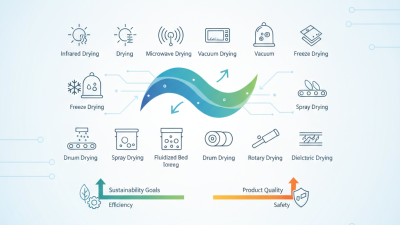
Global buyers increasingly view drying solutions as a risk-control investment, not merely a processing expense. Moisture affects shelf life, weight, microbial stability, transport costs, and product consistency. A damp shipment can arrive with clumping, discoloration, or rejected batches. The commercial impact is immediate.
The Food and Agriculture Organization reported that 13.2% of food is lost between harvest and retail globally in 2022. Its earlier assessments also linked food loss and waste with 8–10% of global greenhouse-gas emissions. Proper drying cannot solve every loss point, but it can protect crops, ingredients, pharmaceuticals, chemicals, and minerals before storage or export. The International Energy Agency identifies industry as a major energy-consuming sector, making dryer efficiency and heat recovery increasingly important for international procurement decisions.
Arun S. Mujumdar, a leading drying technology researcher and editor of Handbook of Industrial Drying, has stated: “Drying is the oldest, most diverse, and most energy-intensive of all chemical engineering operations.” That warning still matters. Buyers must examine moisture targets, residence time, airflow, temperature uniformity, cleanability, and measured energy use. A low purchase price may hide expensive maintenance or uneven product quality. Not every application needs the most advanced dryer.
Reliable suppliers should provide pilot-test evidence, material compatibility data, validated operating ranges, and realistic lifecycle calculations. Independent testing and documented commissioning add confidence across borders. Yet published figures can be imperfect; laboratory results may not represent humid ports, unstable power, or seasonal feedstock. Global buyers should challenge assumptions, compare total ownership costs, and select drying solutions that remain dependable in real operating conditions.
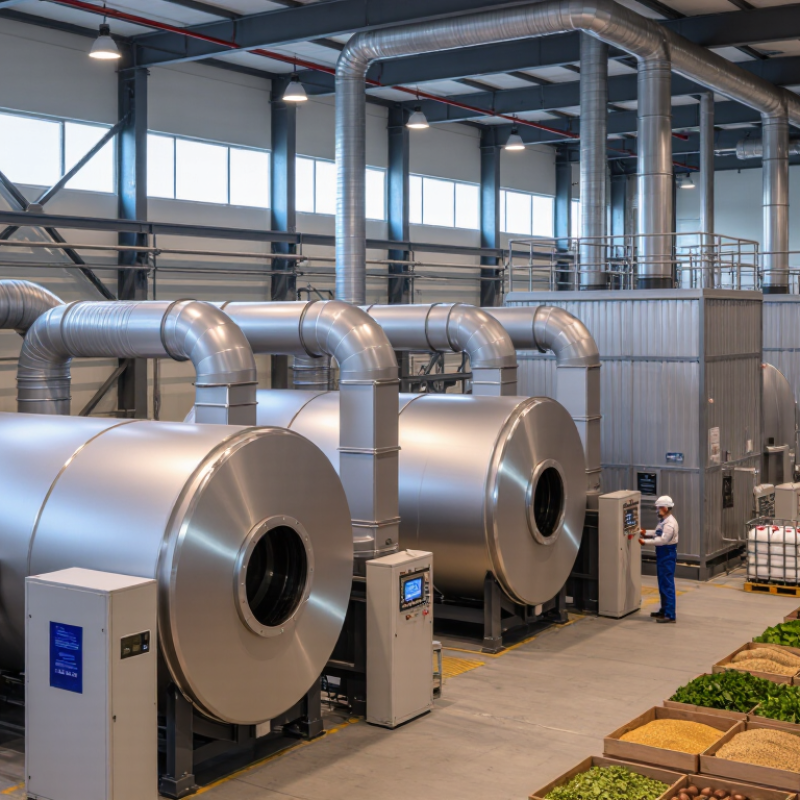
Drying solutions are systems designed to remove unwanted moisture from products, materials, or enclosed spaces. They commonly use heated air, dehumidified air, vacuum pressure, or moisture-absorbing agents. The right method depends on the material, moisture level, temperature tolerance, and required drying speed.
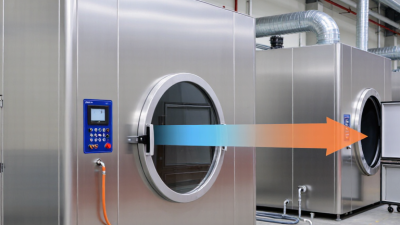
Airflow does the visible work. A controlled stream passes over wet surfaces and carries vapor away. Sensors can measure temperature and humidity during the process. A controller then adjusts heat, fan speed, or air circulation. In a warehouse, this may protect cartons, metal parts, powders, or food ingredients during storage and transport. Small details matter. Poor airflow can leave damp corners.
Vacuum drying lowers air pressure and helps moisture evaporate at lower temperatures. This approach can suit heat-sensitive materials. Desiccant systems absorb humidity from sealed spaces, while dehumidifiers remove water vapor from circulating air. Each solution has limits. Excessive heat may damage a product. Slow airflow may waste energy. A setting that works well in a dry season may fail during coastal shipping.
Practical testing remains important. Buyers should check drying uniformity, energy use, maintenance needs, and sensor accuracy. No system is perfect. Even a well-designed process may need adjustment after real shipment data appears. Condensation can still form when warm packages meet cold air. That risk deserves attention before large-scale purchasing.

Moisture control matters because global cargo rarely stays in one climate. Steel containers move from humid ports to cold warehouses, creating condensation on cartons, metal, and product surfaces. UNCTAD’s Review of Maritime Transport 2023 reports that maritime shipping carries over 80% of world trade by volume. That scale makes small humidity failures expensive. FAO’s State of Food and Agriculture estimates that 13.2% of food is lost between harvest and retail globally. Although this figure covers food systems, it shows why preservation must begin before damage becomes visible.
Drying solutions, including desiccants, humidity indicators, and controlled ventilation, help stabilize cargo during climate transitions. Experienced logistics teams should record container conditions, product moisture limits, and exposure time. ASTM D4332 and ISO 2233 offer useful testing frameworks for packaging and transport conditions. Yet laboratory tests cannot reproduce every route. That limitation deserves attention. A careful specification may still fail when loading occurs during heavy rain.
Tips: Map humidity hotspots at ports, cross-docks, and storage rooms. Use calibrated data loggers, seal cartons quickly, and inspect liners after arrival. Set action thresholds before shipping, not after mold, corrosion, or clumping appears. Review exceptions openly. A missed reading can reveal a weak process.
Industrial drying solutions support industries where moisture affects safety, quality, and production speed. Food processors use them for grains, spices, fruit, dairy powders, and prepared ingredients. Controlled drying helps reduce spoilage while preserving texture, color, and shelf life. A small temperature error can still damage a sensitive product.
Pharmaceutical manufacturers depend on precise drying for powders, granules, and botanical extracts. They must control heat, airflow, and residual moisture carefully. Uneven drying may create inconsistent doses or unstable batches. Cleanable equipment and documented process data also support reliable quality checks. The process is technical.
Chemical producers use industrial dryers for pigments, catalysts, salts, and specialty materials. Stable moisture levels improve handling, storage, and downstream mixing. Mineral processors dry sand, limestone, and other materials before screening or packaging. In these operations, energy use matters because wet feedstock can slow an entire line.
Agriculture, animal feed, wood processing, and wastewater treatment also rely on drying equipment. Feed producers need consistent moisture to prevent mold and improve pellet strength. Timber facilities dry boards gradually, reducing cracking and warping. Wastewater plants use sludge dryers to reduce volume before approved handling. Field experience shows that no single dryer suits every material. Product behavior changes with particle size, humidity, and feed rate, so testing remains essential.
Industrial drying systems help control product quality, shelf life, safety, weight, and energy efficiency across multiple industries.
Food ingredients, pharmaceuticals, paper, timber, ceramics, and textiles all depend on controlled moisture removal. The chart shows representative final moisture targets commonly used in industrial processing; exact specifications vary by product, grade, and applicable standards.
Why Are Drying Solutions Essential for Global Buyers?
Drying solutions improve product quality by controlling moisture, temperature, and airflow. Stable moisture reduces mold risks, clumping, corrosion, and weight variation during transport. FAO’s The State of Food and Agriculture 2019 reported that 14% of food is lost between harvest and retail worldwide. Better drying cannot solve every loss, but it can protect products during a critical stage.
Consistency also improves operational efficiency. Controlled drying shortens rework cycles and supports more accurate packaging weights. Sensors can detect uneven moisture before products leave the facility. Heat recovery and adjustable airflow may reduce energy waste, especially in continuous production. However, efficiency claims need site-specific testing. A dryer performing well in a humid coastal plant may struggle in a dry inland facility.
The UNEP Food Waste Index Report 2024 estimated 1.05 billion tonnes of food waste in 2022. This figure includes households, food service, and retail, so it does not measure drying performance directly. Still, it shows the scale of quality failure across supply chains. Buyers should request moisture-range data, batch records, energy use, and validation methods. A polished specification is not enough. Real products behave differently.
Why Are Drying Solutions Essential for Global Buyers?
Choosing drying equipment requires more than comparing capacity and purchase price. Feed moisture can change daily, especially after rain or seasonal harvesting. A system designed for 30% moisture may struggle when the material arrives at 42%. FAO’s 2019 report estimated that 14% of food is lost between harvest and wholesale. Reliable drying can protect quality, reduce spoilage, and support more predictable exports. Yet, drying is energy-intensive. The U.S. Department of Energy reports that process heating represents about 51% of manufacturing energy use. That figure deserves serious attention.
Global buyers should measure water removal, not only machine output. Ask for specific energy consumption, expressed as energy used per kilogram of evaporated water. Check temperature uniformity, residence time, airflow control, and final moisture variation. A product leaving the chamber at 8% moisture may still develop wet pockets during storage. Testing with real feedstock is essential. Laboratory results can look excellent, but factory conditions are less polite. Buyers should also examine cleaning access, spare-part availability, operator training, and local technical support. An inexpensive dryer can become costly after repeated stoppages.
Tips: Request a documented trial using your actual material. Compare energy use, drying time, yield, and moisture deviation. Review at least one full operating cycle. Do not accept “high efficiency” without measured data. Consider heat recovery and variable-speed controls, but verify their payback under local energy prices. ISO 50001 guidance supports measured energy performance, although certification alone does not guarantee efficient drying. That distinction is easy to miss.
| Drying Technology | Typical Feed Materials | Typical Operating Temperature | Typical Final Moisture Range | Relative Energy Profile | Main Advantages | Key Buyer Considerations |
|---|---|---|---|---|---|---|
| Hot-Air Tray or Cabinet Dryer | Herbs, fruits, vegetables, powders, laboratory and small-batch products | 40–120 °C | Approximately 2–15%, depending on the material and process | Medium to high | Simple operation, flexible batch production, relatively low initial investment, and easy product changeover | Check temperature uniformity, air circulation, tray loading, batch time, insulation quality, and cleaning access |
| Continuous Belt Dryer | Vegetable pieces, fruit slices, food granules, biomass particles, and other free-flowing materials | 50–150 °C | Approximately 3–12% | Medium | Continuous throughput, adjustable residence time, and suitability for medium- to large-scale production | Evaluate belt width, number of drying zones, airflow control, product layer depth, footprint, and conveyor sanitation |
| Rotary Drum Dryer | Minerals, sand, fertilizers, biomass, sludge, and robust granular materials | 80–600 °C, depending on direct or indirect heating | Approximately 1–20% | Medium to high | High capacity, strong mechanical design, and tolerance for variable feed sizes and heavy-duty applications | Confirm residence time, dust collection, wear protection, exhaust treatment, heat-source compatibility, and installation requirements |
| Fluidized-Bed Dryer | Uniform particles, crystals, granules, pellets, and pharmaceutical or food ingredients | 40–150 °C | Approximately 1–8% | Medium | Fast heat and mass transfer, relatively uniform drying, and good control of particle temperature | Material must fluidize properly; verify particle-size distribution, airflow demand, filter design, dust control, and explosion protection |
| Spray Dryer | Milk-based liquids, extracts, emulsions, juices, enzymes, and other pumpable feedstocks | Inlet air commonly 150–250 °C; outlet air commonly 60–100 °C | Approximately 1–8% | High | Converts liquid feed into powder in a single continuous step and offers rapid drying with short particle exposure time | Assess feed viscosity, atomization method, powder recovery, thermal sensitivity, chamber size, exhaust filtration, and cleaning validation |
| Vacuum Shelf or Vacuum Tray Dryer | Heat-sensitive foods, chemicals, botanical extracts, pharmaceuticals, and high-value specialty products | 30–90 °C product temperature is common | Approximately 0.5–5% | Medium to high | Lower boiling temperature, reduced oxidation, and improved protection for heat-sensitive materials | Consider vacuum level, batch size, cycle duration, shelf-temperature uniformity, gasket materials, and vacuum-pump maintenance |
| Freeze Dryer | Biological materials, premium foods, cultures, diagnostic products, and products requiring high structure retention | Product temperature commonly below 0 °C during primary drying; secondary drying often 20–50 °C | Approximately 1–4% | Very high | Excellent retention of shape, aroma, color, and rehydration performance for suitable products | Review capital cost, cycle time, refrigeration capacity, condenser temperature, vacuum performance, shelf area, and power availability |
| Heat-Pump Dryer | Food ingredients, herbs, fruits, vegetables, timber, and other temperature-sensitive materials | 30–80 °C | Approximately 2–15% | Low to medium | Efficient heat recovery, lower operating temperature, reduced exhaust emissions, and good control of humidity | Check coefficient of performance, ambient operating limits, defrost requirements, humidity control, drying uniformity, and local service support |
| Solar-Assisted Dryer | Agricultural products, herbs, fruits, vegetables, grains, and small-scale rural production | Typically 35–70 °C, dependent on solar conditions | Approximately 5–20% | Low operating energy | Can reduce fuel consumption and operating costs where solar resources are reliable | Assess climate, seasonal solar availability, auxiliary heating needs, weather protection, drying consistency, and storage requirements |
| Microwave or Radio-Frequency Dryer | Specialty foods, ceramics, wood products, chemicals, and materials requiring rapid internal heating | Process-dependent; product temperature is commonly controlled below 100 °C for sensitive materials | Approximately 1–10% | Medium to high | Rapid volumetric heating, shorter drying cycles, and potential improvement in internal moisture removal | Verify dielectric properties, electromagnetic shielding, field uniformity, safety compliance, throughput, and integration with final-stage air drying |