How to Choose the Right Drying Equipment

Choosing drying equipment is not a catalog exercise. It is a process decision shaped by the material, moisture target, production rate, and available energy. The International Energy Agency’s Tracking Industry 2023 report estimates that industry accounts for about 37% of global final energy use. That figure covers many industrial processes, not drying alone, but it shows why energy performance deserves careful attention. Small operating differences can matter across long production runs.

Start with measurable conditions: feed moisture, required final moisture, batch size, and product temperature limits. Then compare dryer types using verified test data, including drying time and energy consumed per unit of water removed. The equipment of drying must also fit the real plant: check available floor space, exhaust capacity, cleaning access, and how operators load and unload material. The U.S. Department of Energy’s process-heating guidance supports evaluating system performance as a whole, rather than judging equipment by its heat source alone.

Look closely at the evidence. Ask suppliers for trials using representative material, and record results under stated conditions. A polished brochure is not a plant test. That matters. A spreadsheet can miss seasonal humidity, uneven feed, or frequent changeovers. I would not treat one trial as proof of long-term performance; repeatability still needs checking. The right choice balances product quality, throughput, energy use, maintenance, and practical operating demands—not the highest advertised capacity.
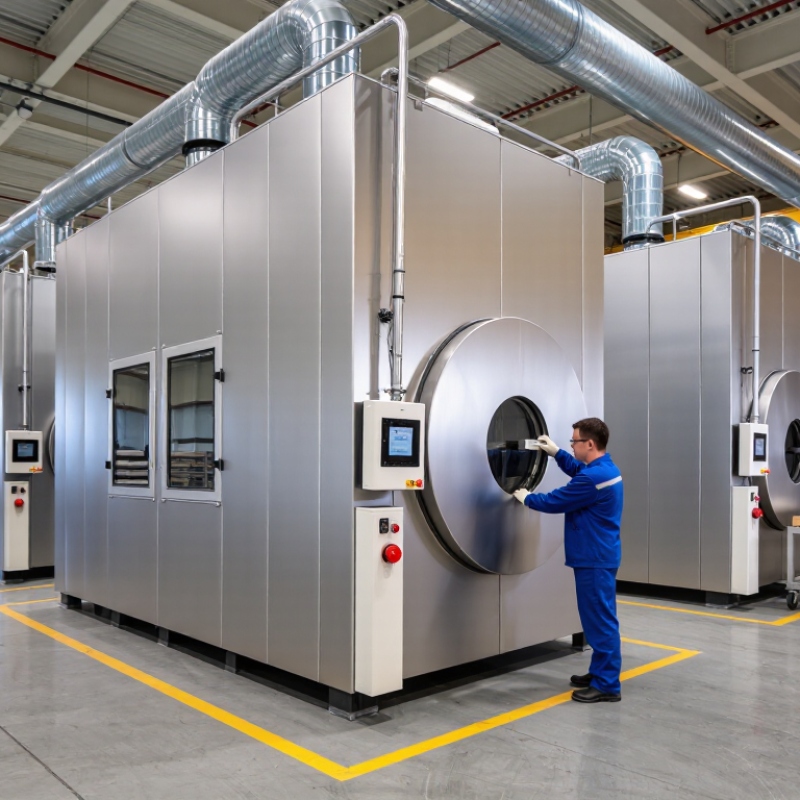
How to Choose the Right Drying Equipment

Define the Material and Drying Requirements

Define the material before comparing machines. Record its starting and target moisture, particle size, bulk density, and heat sensitivity. Also note whether it arrives as slurry, granules, sheets, or uneven lumps. These details shape heat transfer and residence time. A powder that dries evenly in a laboratory tray may form damp pockets in a deep production bed. Measure representative samples, not just the easiest ones.

Energy matters, too. The U.S. Department of Energy’s 2022 Industrial Decarbonization Roadmap estimates that process heating accounts for about 51% of U.S. manufacturing energy use. Drying is only one part of that total, but the figure shows why inlet temperature, exhaust losses, and heat recovery deserve attention. Define the required throughput and final moisture range, then test the material at realistic loading. A tidy specification can still miss the wet corner of a batch.

Tips: Track moisture at several points, including the center of the load. Note color, texture, and any heat damage. Small checks help. Recheck seasonal feed changes; a setting that worked last month may not work now. Source: U.S. Department of Energy, Industrial Decarbonization Roadmap (2022).
Match Drying Methods to Product Characteristics

How to Choose the Right Drying Equipment

Match Drying Methods to Product Characteristics

Choosing drying equipment starts with how a product holds moisture and responds to heat. Thin apple slices dry differently from sticky fruit pulp. A belt dryer can move slices gently through controlled warm air, while a spray dryer can turn a pumpable liquid into powder. For free-flowing granules, a fluid-bed dryer may offer efficient contact with heated air. But fragile pieces may break during agitation. Small details matter.

Tips: Check the product’s starting moisture, particle size, and heat sensitivity. Test a small sample under realistic conditions. Record drying time, final moisture, and any change in color or texture.

Do not choose by capacity alone. A machine that dries quickly may leave damp pockets if the material clumps or varies in size. Ask how evenly air reaches the product, and whether the material sticks to belts, walls, or trays. These issues can be easy to miss in a short test. Slightly uneven results are still useful: they show what needs adjusting. Compare samples at the same final moisture level, then assess texture and handling before selecting a method.

Compare Equipment Types and Performance

Choosing drying equipment is less about maximum heat and more about matching the machine to the material. Tray dryers suit small batches and gentle handling, but drying can vary between shelves. Rotary dryers handle larger volumes of granules; however, fragile pieces may break during tumbling. Fluid-bed systems move warm air through particles efficiently, provided the feed is fairly uniform. Spray dryers turn liquids into powder quickly, though setup and operating demands are higher.

Compare performance using measurable targets: kilograms processed per hour, final moisture range, energy use, and product quality. A dryer that removes moisture quickly may still create damp pockets or scorch delicate material. Ask for test data using a sample close to your actual feed, not an idealized substitute. Check inlet and outlet temperatures, loading depth, and cleaning time. Small differences matter. I would also treat supplier estimates as starting points; real results can shift with seasonal moisture or uneven particle sizes.

Tips: Record starting and final moisture, batch weight, and drying time during trials. Inspect several samples, including material from the center of the load. Leave room for a second test—one trial can mislead.

Assess Capacity, Energy Use, and Operating Conditions

Choosing a dryer starts with the material, not the machine’s advertised capacity. Estimate peak hourly throughput and incoming moisture, then size for the water that must be removed. A unit rated for average production may struggle during a humid shift or a sudden increase in feed. Leave practical headroom, but avoid oversizing: idle heated space can waste energy. Small gaps matter.

Compare energy per kilogram of water removed, not just the motor’s power rating. Include fans, heaters, exhaust, and heat recovery in the calculation. The U.S. Energy Information Administration’s 2018 Manufacturing Energy Consumption Survey reports 25.4 quadrillion Btu of manufacturing energy use. That broad figure is not dryer-specific, but it shows why process efficiency deserves close attention. Ask suppliers for test data using your material and target moisture level; results from a different feedstock may not transfer. The comparison is imperfect, but better than relying on a brochure.

Tips: Test representative batches across expected operating conditions. Record inlet moisture, product temperature, airflow, outlet moisture, and energy use. Check whether the dryer can handle seasonal humidity and required cleaning cycles. Heat-sensitive products may need lower temperatures and longer residence times; dense or uneven loads can dry inconsistently. Review the actual operating data after installation, too. Settings that look right on paper may need adjustment on the floor.

How to Choose the Right Drying Equipment — Assess Capacity, Energy Use, and Operating Conditions
Dryer Type Typical Capacity Basis Indicative Energy Use Typical Operating Conditions Best Suited To Key Selection Consideration
Tray / Cabinet Dryer About 5–100 kg of wet material per batch; output depends on tray loading and drying time. Approximately 1.2–2.5 kWh of heat per kg of water removed. Batch operation; commonly uses heated air at roughly 40–120°C. Product is spread in shallow layers on trays. Small or moderate batches of pieces, powders, herbs, and heat-tolerant products. Simple and flexible, but labor, batch time, and drying uniformity can limit throughput.
Rotary Dryer Approximately 100–5,000 kg of water evaporated per hour, depending on size and material. Often about 0.9–1.8 kWh of heat per kg of water removed. Continuous operation; a rotating, slightly inclined drum tumbles solids through hot gas. Product temperatures vary by design and feed moisture. Large-volume, free-flowing solids such as minerals, aggregates, and some biomass. Robust for high throughput; check particle attrition, dust control, and product-temperature limits.
Fluidized-Bed Dryer Approximately 20–1,000 kg of water evaporated per hour; suitable capacity depends on particle size and fluidization behavior. Often about 0.9–1.8 kWh of heat per kg of water removed. Continuous or batch operation; upward-flowing heated air suspends and mixes particles. Commonly used at moderate temperatures. Uniform, free-flowing granules, crystals, and particles that can be fluidized. Provides fast, even drying, but is unsuitable for sticky, very large, or easily damaged particles without process adaptation.
Spray Dryer Approximately 50–3,000 kg of water evaporated per hour, depending on atomizer, chamber, and feed properties. Often about 1.0–2.5 kWh of heat per kg of water removed. Continuous operation; liquid feed is atomized into hot air. Inlet air is commonly around 150–250°C; outlet air is often around 70–110°C. Solutions, suspensions, and emulsions that need to become powders, including many food and chemical products. Enables rapid powder production; assess feed viscosity, powder recovery, exhaust treatment, and heat sensitivity.
Belt Dryer Approximately 100–2,000 kg of water evaporated per hour, depending on belt area, air flow, and product loading. Often about 0.8–1.6 kWh of heat per kg of water removed. Continuous, staged hot-air drying; product moves through one or more temperature and humidity zones. Food pieces, biomass, sludge, and other materials that can be spread in a consistent layer. Offers controlled, gentle handling; requires adequate floor space and an even feed layer for consistent results.
Freeze Dryer (Lyophilizer) Usually specified by ice-removal capacity per batch; capacity varies widely with shelf area, load, and cycle duration. Electricity use can be roughly 10–30 kWh per kg of water removed; actual use is highly dependent on product and cycle. Batch operation under vacuum; product is frozen, then ice is removed by sublimation. Product temperature is carefully controlled. High-value, heat-sensitive products where structure, rehydration, or long-term stability is important. Preserves delicate product qualities, but usually has the longest cycles and highest equipment and energy costs.

Planning note: Capacity and energy figures are indicative industrial ranges, not guaranteed performance. Compare energy on the same basis (for example, heat input or electricity per kg of water removed) and confirm results with material-specific trials. Feed moisture, target moisture, ambient conditions, heat recovery, and product constraints can significantly change performance.

Check Safety, Maintenance, and Total Cost of Ownership

Choosing a dryer on purchase price alone can make a costly mistake. Compare energy use, spare-part availability, cleaning time, and expected service life. Ask for measured consumption at your intended throughput, not just the rated capacity. A dryer that runs longer than expected may quietly add utility costs every shift. Small leaks matter. Include filters, belts, bearings, and planned downtime in the ownership estimate.

Safety belongs in the same calculation. Check guarding, emergency stops, temperature controls, and access for cleaning. If the process creates combustible dust, review OSHA’s guidance on dust hazards and confirm suitable collection and housekeeping provisions.

The U.S. Department of Energy’s Operations & Maintenance Best Practices Guide reports that effective maintenance programs can reduce energy use by 5–20%. That is a broad benchmark, not a dryer-specific guarantee. Still, it shows why maintenance planning can affect operating cost.

Request a maintenance schedule and a clear list of wear parts before choosing equipment. Compare the cost of routine inspections with the cost of unexpected stoppages. A spreadsheet can miss the awkward details: a filter that is hard to reach, or a cleanout that takes two people. I would challenge any estimate that assumes perfect uptime. Real plants are messier. Check the assumptions against your actual shifts, material, and cleaning routine.