10 Best Drying Equipment Manufacturers Worldwide

Choosing a drying system is rarely just a matter of comparing machine prices. A food processor may need gentle, even heat, while a chemical plant may prioritize controlled airflow and consistent batch results. In both cases, the wrong fit can waste energy, slow production, or affect product quality.

This guide to 10 Best Drying Equipment Manufacturers Worldwide introduces suppliers serving a range of industrial needs. It considers practical factors such as dryer type, processing capacity, temperature control, automation, materials, and after-sales support. These details matter. A compact laboratory dryer and a continuous production-line system solve very different problems, even when both remove moisture.

Manufacturer claims are useful starting points, not a substitute for checking specifications. Buyers should compare performance against their own materials, target moisture levels, operating conditions, and cleaning requirements. Ask for test data or a product trial when possible. Also check whether installation help, spare parts, and technical service are available in your region.

There is no single best manufacturer for every application. That sounds tidy, but real purchasing decisions are messier. A well-known brand may not offer the right configuration, while a smaller supplier may meet a specific process need. The companies featured here provide a starting point for research, not a guarantee of fit. Verify current capabilities directly before making a shortlist.
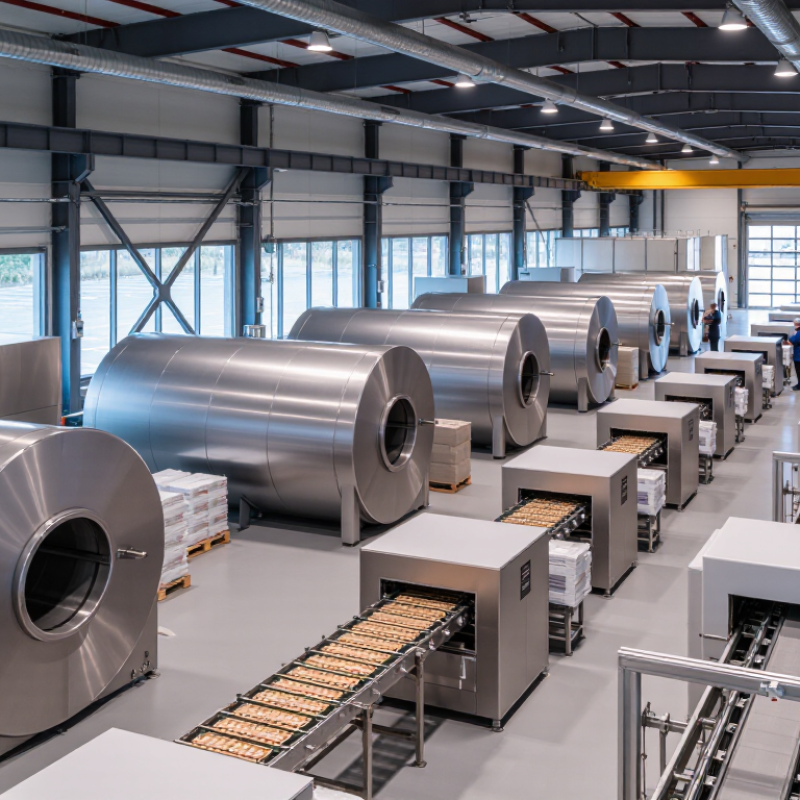
10 Best Drying Equipment Manufacturers Worldwide

Types of Industrial Drying Equipment and Their Applications

Industrial drying equipment uses heated air, contact surfaces, vacuum, or moving beds to remove moisture. Rotary dryers turn material inside a slowly rotating drum, making them suitable for minerals, aggregates, and other robust solids. Their tumbling action handles varied particle sizes, though fragile products may break. Fluidized-bed dryers suspend granules in rising air, supporting even heat transfer in food and pharmaceutical production. Small details matter.

Spray dryers convert liquid feeds into powder by dispersing droplets through hot air. They are used for products such as milk powders and food ingredients, where particle size and outlet moisture affect handling and storage. Belt dryers move material through controlled heating zones, making them useful for sliced produce, fibers, and other solids requiring steady, continuous processing. Vacuum dryers lower the boiling point of moisture, which can help protect heat-sensitive materials.

The right choice depends on more than throughput. Particle size, starting moisture, heat sensitivity, and the required final moisture level all shape performance. A neat specification sheet can still miss real production behavior. Tests using representative material often reveal sticking, uneven drying, or unexpected energy demand. A single trial may not capture seasonal changes or shifts in feed quality, either. Operators should also consider cleaning access, temperature controls, and how easily the dryer fits into the existing process.
Criteria for Evaluating Global Drying Equipment Manufacturers

Choosing among global drying equipment manufacturers requires more than comparing catalog capacity. Start with the material: its moisture level, particle size, heat sensitivity, and behavior during handling. Ask for performance data from trials using a representative sample, not just ideal laboratory conditions. Check that test conditions match your process and that results include final moisture, throughput, and energy use. Numbers matter.

Tips: Request a witnessed factory test with a consistent feed sample. Record inlet and outlet moisture, product temperature, and power consumption. Confirm who provides commissioning, operator training, spare parts, and regional support.

Evaluate whether the manufacturer can adapt airflow, temperature controls, and equipment materials to your product. Ask for drawings, maintenance intervals, and clear operating limits. For powders or fragile pieces, inspect how the design reduces uneven drying and product damage. Review safety features and the quality of operating documentation. A polished proposal can still miss practical details, so ask users about downtime and service response. No supplier is ideal for every application; compare evidence against your own production needs.

Profiles of Ten Leading Drying Equipment Manufacturers Worldwide

A worldwide profile of ten leading drying equipment manufacturers should compare capabilities, not just catalogue size. The group spans makers of spray, rotary, fluid-bed, belt, vacuum, and freeze-drying systems. Each profile can note its main industries, typical batch or continuous designs, heat sources, controls, and service reach. These details help buyers match equipment to materials, throughput, and plant conditions. Performance varies.

Energy use deserves close attention. The International Energy Agency’s Tracking Industry 2023 report says industry accounts for about 37% of global final energy consumption. That makes heat recovery, insulation, and efficient airflow practical comparison points, not decorative features. For food applications, the FAO’s State of Food and Agriculture 2019 estimated that 13.8% of food was lost after harvest and before retail in 2016. Drying can help preserve products, but the right process depends on moisture sensitivity, operating costs, and product quality targets. Published capacity figures are not always measured under comparable conditions. That caveat matters. Profiles should therefore distinguish manufacturer claims from independently reported data and identify where public technical evidence is limited.

Typical Temperature Ranges in Industrial Drying Processes

These approximate ranges represent common operating conditions, not manufacturer specifications. Temperature measurement points differ by process, and actual settings depend on the material, product requirements, and equipment design.

Comparison of Manufacturers by Technology and Industry Focus

Drying equipment manufacturers differ less by the machines they list than by the problems they are built to solve. Spray dryers suit liquid feeds that need to become fine powders, while vacuum systems help protect heat-sensitive materials. Fluid-bed units offer controlled contact between warm air and particles. Belt dryers handle continuous processing of foods, plant materials, and other solids.

Industry focus shapes practical design choices. A food processor may prioritize even moisture removal and cleanable product-contact surfaces. A pharmaceutical facility may need tightly controlled temperature, airflow, and batch records. Mineral and chemical producers often look for high throughput and durable components that tolerate abrasive or variable feed. These are broad patterns, not guarantees; actual performance depends on the material and operating conditions.

Compare manufacturers using test data, not only catalog capacity. Ask how they measure final moisture, manage dust, and respond when feed composition changes. A sample trial can reveal uneven drying that a specification sheet misses. Small details matter. Check energy use, maintenance access, and local service support, too. One weakness in this comparison is that published figures may use different test methods. Buyers should request comparable data and confirm results with their own product before choosing a system.

Key Factors in Selecting a Drying Equipment Manufacturer

Selecting a drying equipment manufacturer starts with the material, not the machine brochure. Define the product’s moisture level, heat sensitivity, batch size, and required final dryness before comparing proposals. A powder, a wet granule, and a fragile slice may need very different airflow and handling. Details matter. Ask how the supplier will test a representative sample, and request measurements for drying time, temperature uniformity, and final moisture content. A polished demonstration is useful, but production-scale results matter more.

Review the equipment’s construction, controls, cleaning access, and energy use under realistic operating conditions. For example, can an operator reach the filter without dismantling a hot enclosure? Can the system record temperatures across the load, rather than at one convenient point? Ask for reference installations with similar materials and capacity, plus clear documentation for maintenance and operator training. Service response times and spare-part availability deserve the same attention as purchase price. I would still treat projected savings cautiously: estimates can shift when loading patterns or seasonal humidity change. A credible manufacturer should explain assumptions, discuss limitations openly, and support a trial before final specifications are fixed.

10 Best Drying Equipment Manufacturers Worldwide - Key Factors in Selecting a Drying Equipment Manufacturer

Representative drying-equipment manufacturer capability categories. These categories are not a ranked list of named companies.
No. Manufacturer Capability Profile Common Dryer Types Typical Materials or Uses Key Selection Factors Useful Verification Checks
1 Spray-drying specialists Spray dryers; rotary or fluid-bed finishing systems Liquid feeds and slurries converted into powders, including food ingredients, ceramics, and chemical products Feed properties, target particle size, inlet and outlet temperatures, powder recovery, and cleaning requirements Request comparable feed trials, powder-quality results, and details of the cyclone or filter recovery system
2 Fluid-bed drying specialists Batch and continuous fluid-bed dryers; fluid-bed granulators Free-flowing granules, pellets, and particles in pharmaceutical, food, and chemical processes Particle-size distribution, fluidization behavior, product temperature limits, and dust containment Check airflow uniformity, filter-cleaning design, containment options, and product test data
3 Rotary-dryer specialists Direct- and indirect-fired rotary dryers; rotary kilns for suitable processes Bulk solids such as minerals, aggregates, biomass, and selected industrial materials Throughput, feed moisture, particle size, residence time, exhaust treatment, and heat-source choice Review mass-and-energy balances, material handling details, emissions controls, and wear provisions
4 Belt-dryer specialists Single- and multi-zone conveyor belt dryers Food pieces, wood products, fibers, and other materials suitable for a shallow, continuous bed Bed depth, residence time, air recirculation, product uniformity, and belt-cleaning access Ask for moisture-uniformity data, airflow-zone design, sanitation details, and operating-cost assumptions
5 Tray and batch-oven specialists Tray dryers; cabinet dryers; controlled-temperature batch ovens Small or variable production batches, laboratory materials, and products loaded on trays Temperature uniformity, batch size, airflow pattern, loading method, and cycle repeatability Verify loaded-chamber temperature mapping, documented cycle controls, and tray-to-tray consistency
6 Vacuum-drying specialists Vacuum shelf dryers; vacuum ovens; vacuum paddle dryers Heat-sensitive or oxygen-sensitive materials that benefit from reduced-pressure processing Operating pressure, product heat sensitivity, solvent handling, condenser capacity, and cycle time Confirm achievable pressure under load, leak testing, solvent recovery design, and material compatibility
7 Freeze-drying specialists Batch and pilot-scale freeze dryers; production lyophilizers Biological materials, pharmaceuticals, and foods requiring low-temperature dehydration and porous dried products Product load, shelf temperature control, condenser capacity, vacuum performance, and cycle development Review sublimation-capacity calculations, shelf uniformity, process-data recording, and cleaning provisions
8 Flash and pneumatic-drying specialists Flash dryers; pneumatic or conveying-tube dryers Dispersible, wet solid feedstocks that can be transported and dried in a moving gas stream Feed dispersion, particle residence time, inlet moisture, product temperature, and solids separation Test the actual feed, assess dust collection, and verify that the material can be conveyed without blockage
9 Paddle and agitated-dryer specialists Indirectly heated paddle dryers; agitated vacuum dryers Pastes, sludges, filter cakes, and other solids that benefit from mechanical mixing Feed consistency, mixing intensity, heat-transfer surface, discharge behavior, and vapor handling Evaluate a representative feed test, shaft and seal design, cleanout access, and vapor-condensation needs
10 Heat-pump and dehumidification-dryer specialists Closed-loop heat-pump dryers; dehumidified-air drying systems Materials suited to controlled, lower-temperature air drying, including selected foods, timber, and polymers Required drying temperature, ambient conditions, humidity control, airflow, and energy-use measurement Compare energy figures at stated test conditions and verify controls, condensate management, and capacity range